
Conservative Community • American History • Patriotic ApparelPATRIOTMURICA
Proud of America’s story. Faithful to the Constitution. America First.
Two hundred fifty years of American history, the Republican record from Lincoln to Trump, a community of conservatives who love their country, and patriotic goods from our Shop.
PatriotMurica Shop
Patriotic Apparel & Gifts
Original designs on tees, hoodies, hats, flags and mugs, printed to order. No membership needed to buy.
- Premium
Free U.S. shipping over $75, $6.95 belowMade to order: ships in 2–7 business daysPay with PayPal or card
Visit the Shop

The 45th & 47th President
Donald J. Trump
Elected in 2016 and again in 2024, he is the second president, after Grover Cleveland, to serve non-consecutive terms. His first term brought the Tax Cuts and Jobs Act, three Supreme Court justices, the First Step Act and the Abraham Accords. In 2024 he won both the Electoral College and the popular vote, and on January 20, 2025, he took the oath of office again.
- Terms
- 2017–2021 · 2025–
- Vice presidents
- Mike Pence · JD Vance
- Born
- June 14, 1946, Flag Day
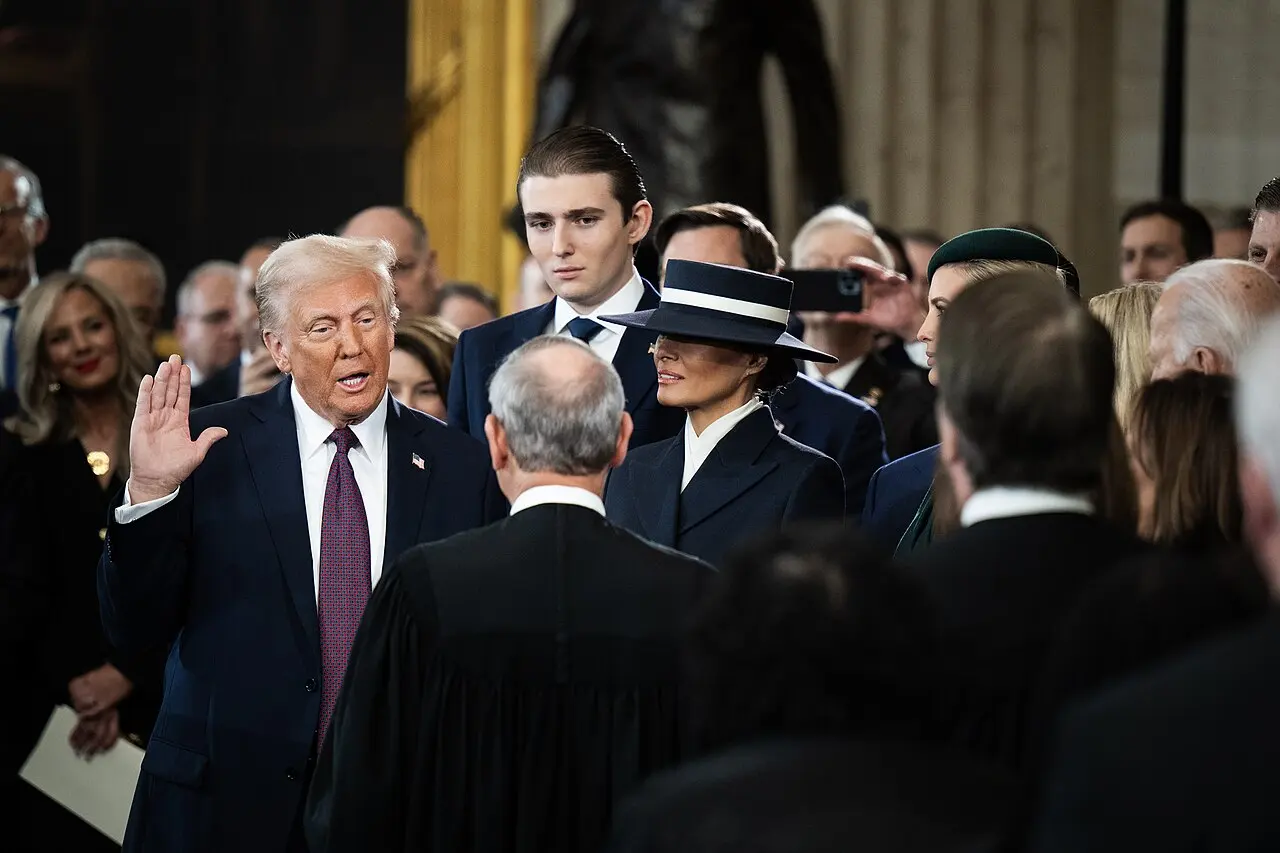
Taking the oath of office as the 47th President, Capitol Rotunda, January 20, 2025Photo: Ike Hayman, Joint Congressional Committee on Inaugural CeremoniesPublic domainSource of this photograph (opens in a new tab) 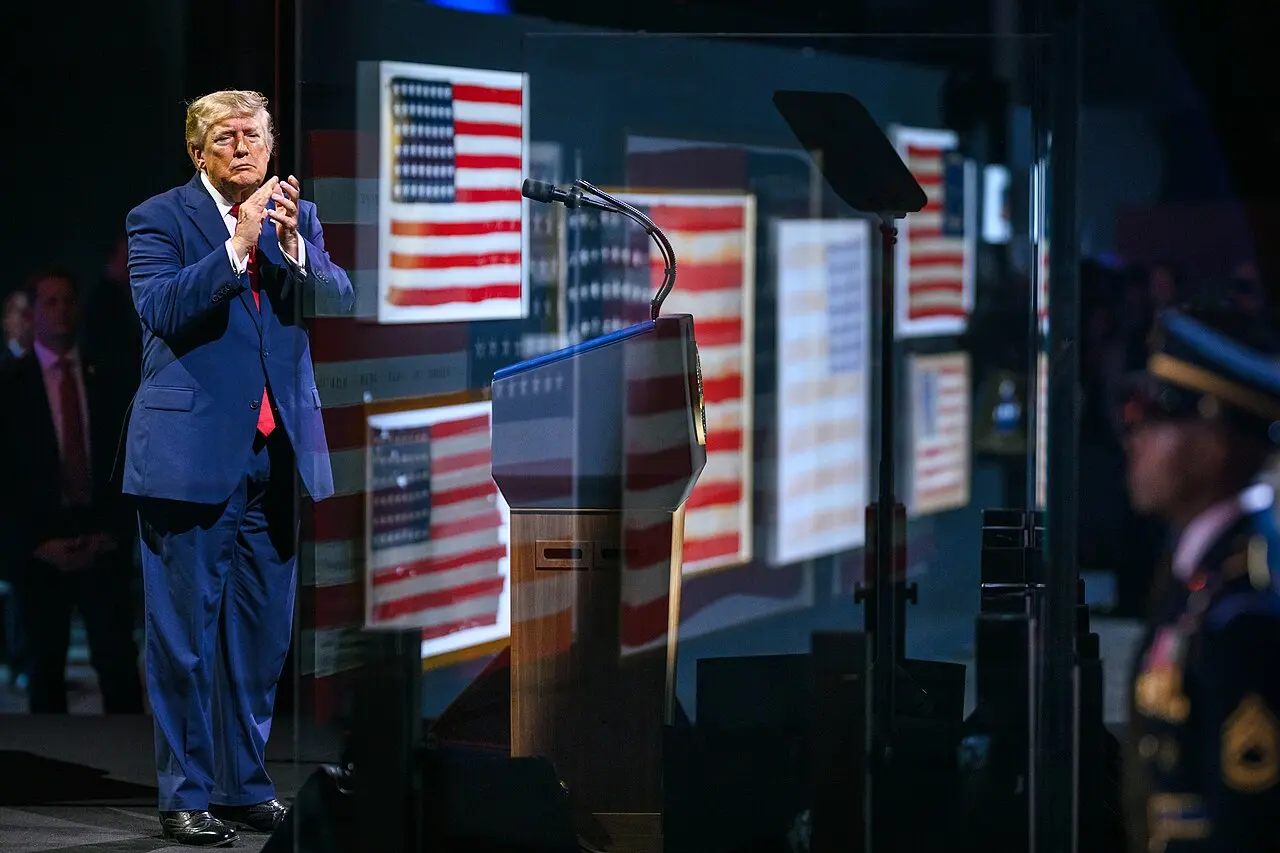
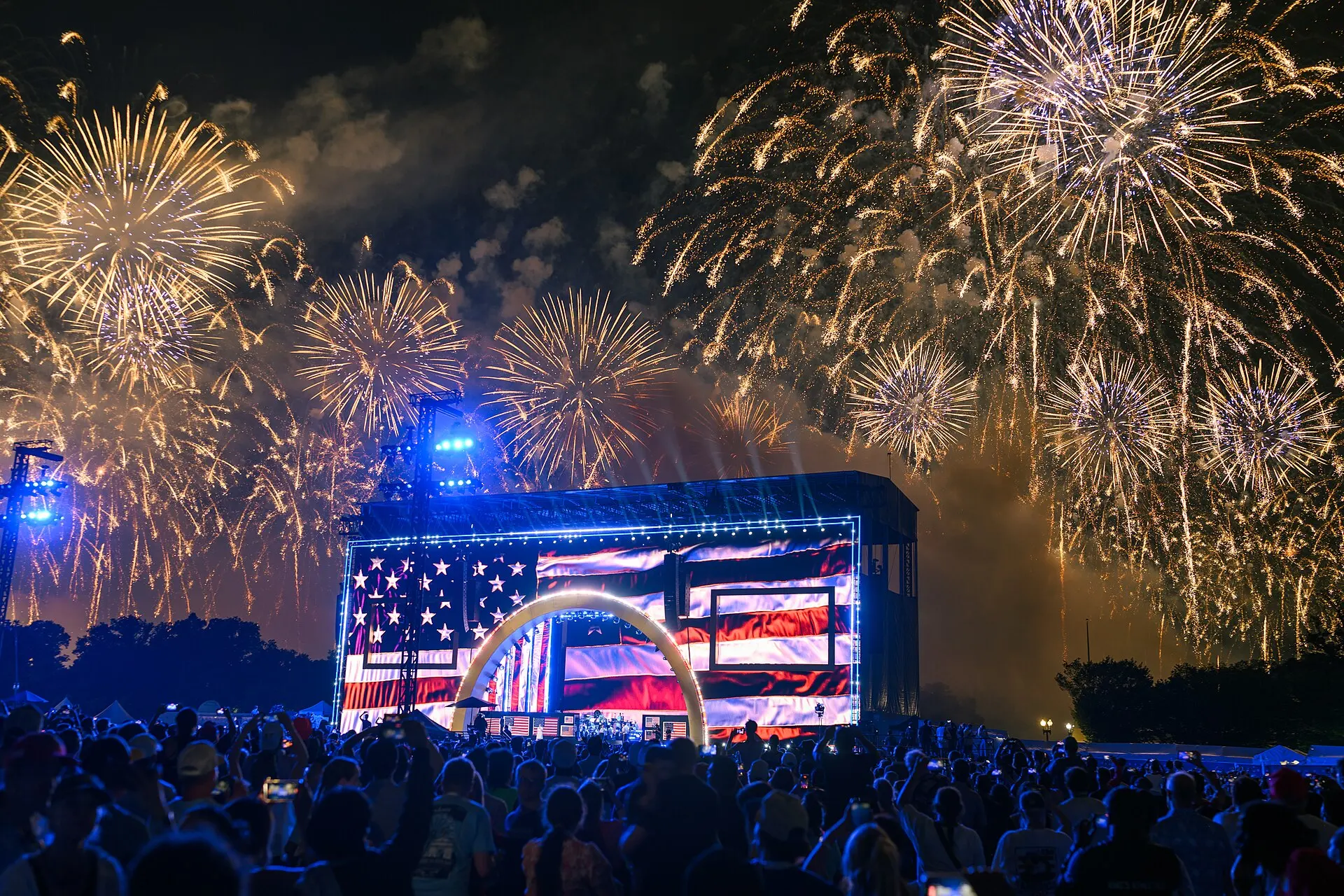
At Salute to America 250 on the National Mall, July 4, 2026Photo: The White HousePublic domainSource of this photograph (opens in a new tab) 
Remarks at the Great American State Fair, National Mall, June 24, 2026Photo: Daniel Torok, The White HousePublic domainSource of this photograph (opens in a new tab) 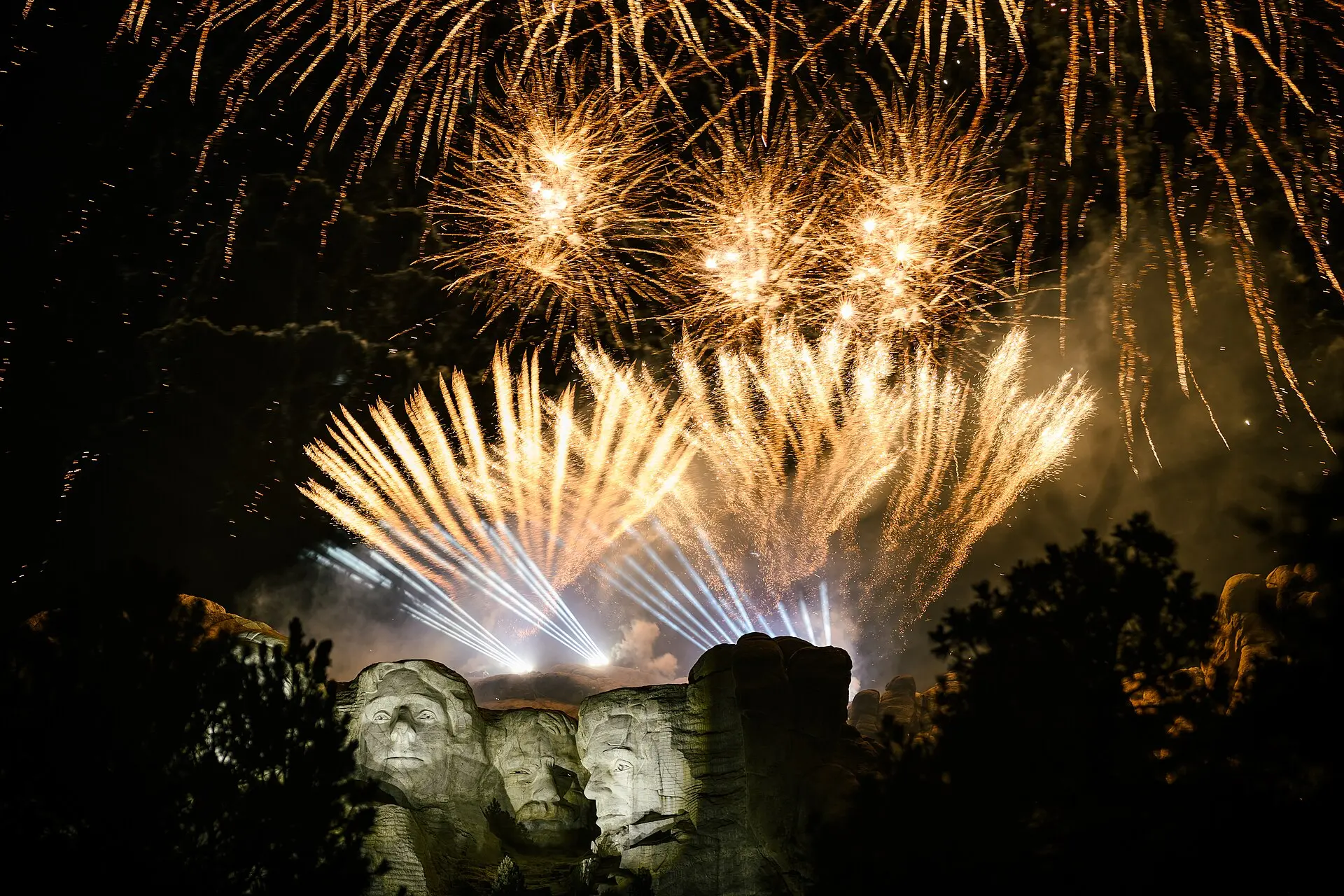
Fireworks over Mount Rushmore National Memorial after President Trump’s remarks, Independence Day 2026Photo: The White HousePublic domainSource of this photograph (opens in a new tab)
Historical RecordOfficial photographs, in the public domain, published as historical record. PatriotMurica is independent and is not affiliated with or endorsed by President Trump, the White House or any campaign.
Symbols of the Republic
Old Glory and the Bald Eagle
Thirteen stripes for the original colonies, fifty stars for the states, and the bird the Founders chose for the Great Seal.
The Stars and Stripes
- June 14, 1777. The Second Continental Congress resolves that the flag be thirteen stripes, alternate red and white, with thirteen white stars in a blue field.
- 1916 and 1949. Woodrow Wilson proclaims June 14 Flag Day; Congress makes National Flag Day law on August 3, 1949.
- August 21, 1959. Executive Order 10834 sets the design of the fifty-star flag, flown since July 4, 1960.

The Bald Eagle
- June 20, 1782. The Continental Congress adopts the Great Seal of the United States, with the bald eagle at its center.
- 1940 to 2007. Protected by the Bald Eagle Protection Act of 1940, the eagle recovers from near extinction in the lower forty-eight and leaves the endangered species list in 2007.
- 2024. An act of Congress makes the bald eagle the official national bird of the United States.
1776 · 250 Years · 2026
The Milestones
The founding, the Union, the wars and the work of free people.
1776
Declaration of Independence adopted
The Continental Congress declares the thirteen colonies free and independent states.
1781
Victory at Yorktown
The surrender of Lord Cornwallis’s army to American and French forces effectively wins the Revolutionary War.
1787
Constitution signed in Philadelphia
Delegates to the Constitutional Convention sign a new framework of government for the United States.
1789
Washington becomes first president
George Washington takes the oath of office in New York City, the first capital under the Constitution.
1791
Bill of Rights ratified
The first ten amendments to the Constitution take effect, guaranteeing fundamental liberties.
1803
The Louisiana Purchase
The United States buys the Louisiana Territory from France, roughly doubling its size.
1814
Fort McHenry inspires the anthem
Francis Scott Key writes the verses of “The Star-Spangled Banner” after watching the fort withstand a British bombardment.
1848
Seneca Falls Convention
The first women’s rights convention in the United States calls for equality, including the right to vote.
1854
Republican Party founded
Opponents of slavery’s expansion organize the Republican Party after passage of the Kansas–Nebraska Act.
1861
Civil War begins
Confederate forces fire on Fort Sumter, beginning four years of civil war.
1863
Emancipation Proclamation takes effect
President Lincoln declares free the enslaved people in areas still in rebellion.
1865
Thirteenth Amendment abolishes slavery
Ratification ends slavery throughout the United States.
1868
Fourteenth Amendment ratified
The amendment guarantees birthright citizenship, due process and the equal protection of the laws.
1869
Transcontinental railroad completed
A ceremonial golden spike at Promontory Summit, Utah, joins the Union Pacific and Central Pacific railroads.
1886
Statue of Liberty dedicated
A gift from France, the statue in New York Harbor becomes a symbol of freedom and of welcome to immigrants.
1903
First powered flight
Orville and Wilbur Wright fly the first successful powered airplane near Kitty Hawk, North Carolina.
1917
America enters World War I
Congress declares war on Germany, and some two million Americans go on to serve in France.
1920
Nineteenth Amendment ratified
Women win the constitutional right to vote.
1929
Stock market crashes
The Wall Street crash of “Black Tuesday” ushers in the Great Depression.
1941
Attack on Pearl Harbor
Japan’s surprise attack brings the United States into World War II.
1944
D-Day in Normandy
Allied forces land in France to begin the liberation of Western Europe.
1945
World War II ends
Japan formally surrenders aboard USS Missouri in Tokyo Bay.
1954
Brown v. Board of Education
The Supreme Court strikes down state-mandated segregation in public schools.
1964
Civil Rights Act signed
Landmark legislation outlaws segregation in public accommodations and discrimination in employment.
1969
Apollo 11 lands on the Moon
Neil Armstrong and Buzz Aldrin become the first people to walk on the Moon.
1976
The Bicentennial
Americans celebrate 200 years of independence with ceremonies, parades and tall ships in New York Harbor.
1989
Berlin Wall falls
The opening of the Berlin Wall signals the collapse of communist rule in Eastern Europe.
1991
Soviet Union dissolves
The Soviet Union breaks apart, ending the Cold War.
2001
September 11 attacks
Terrorist attacks kill nearly 3,000 people in New York, at the Pentagon and in Pennsylvania.
2026
America turns 250
The United States marks the 250th anniversary of the Declaration of Independence.
An American Anthem
Born in the U.S.A.
Bruce Springsteen, 1984. The official video, played from the artist's YouTube channel.
Primary Source · The Founding Text
The Constitution of the United States
Seven articles and twenty-seven amendments, read in full with the history and landmark cases that give them meaning. We link each one to its transcription at the National Archives.
- Constitutional Convention opens
- May 25, 1787
- Delegates who attended
- 55
- Signed
- September 17, 1787
- Ratification complete
- June 21, 1788
The Republican Story
1854 to Today
11 eras and 19 presidents. The party of Lincoln, Roosevelt, Eisenhower, Reagan, the Bushes and Trump has been several different movements, and the archive shows how it changed. Every era includes its criticism and debate.
- 1854A Party Is FoundedOpposing the expansion of slaveryEra I · 1854–1860
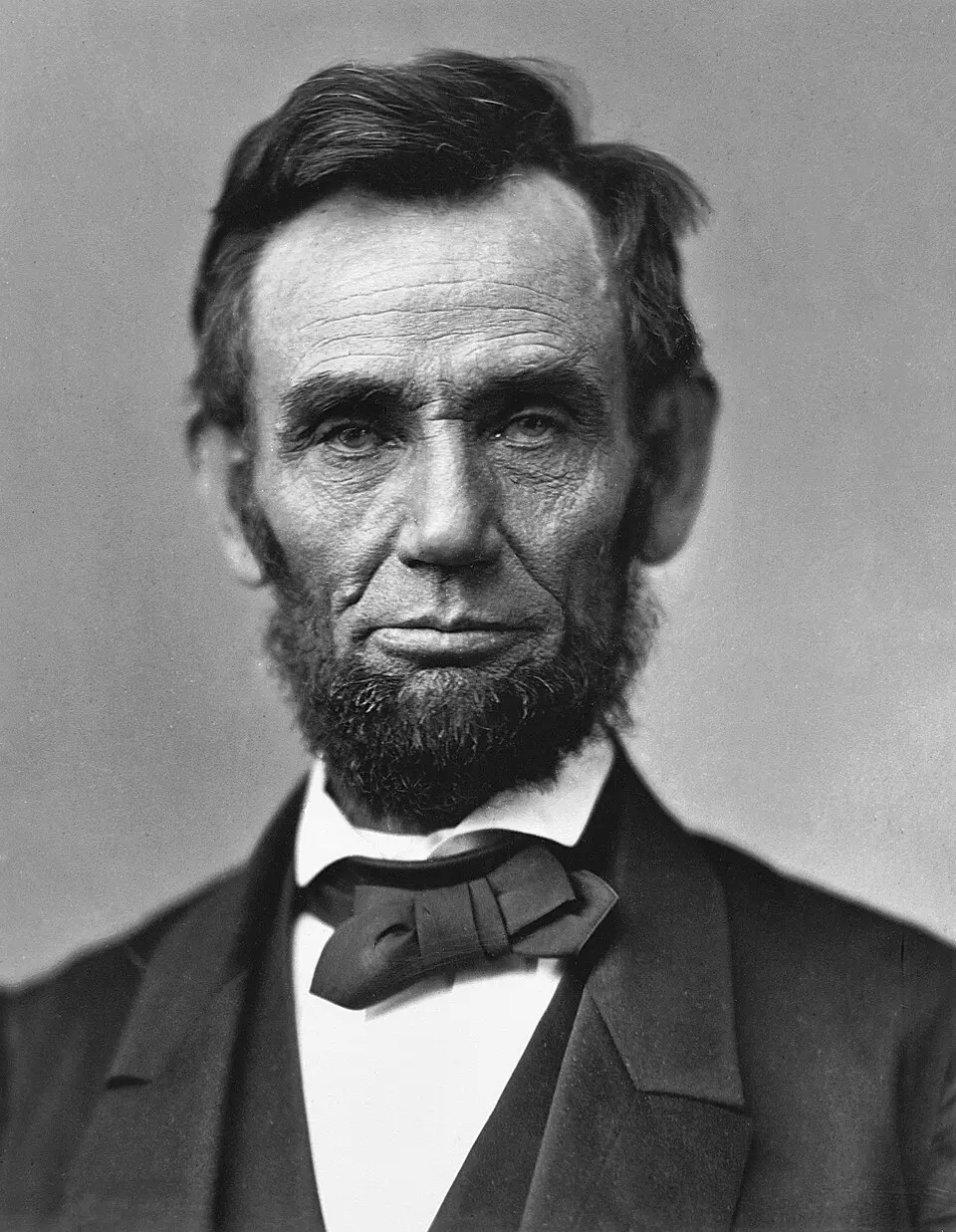
- 1861Abraham LincolnUnion, emancipation, ReconstructionEra II · 1861–1877
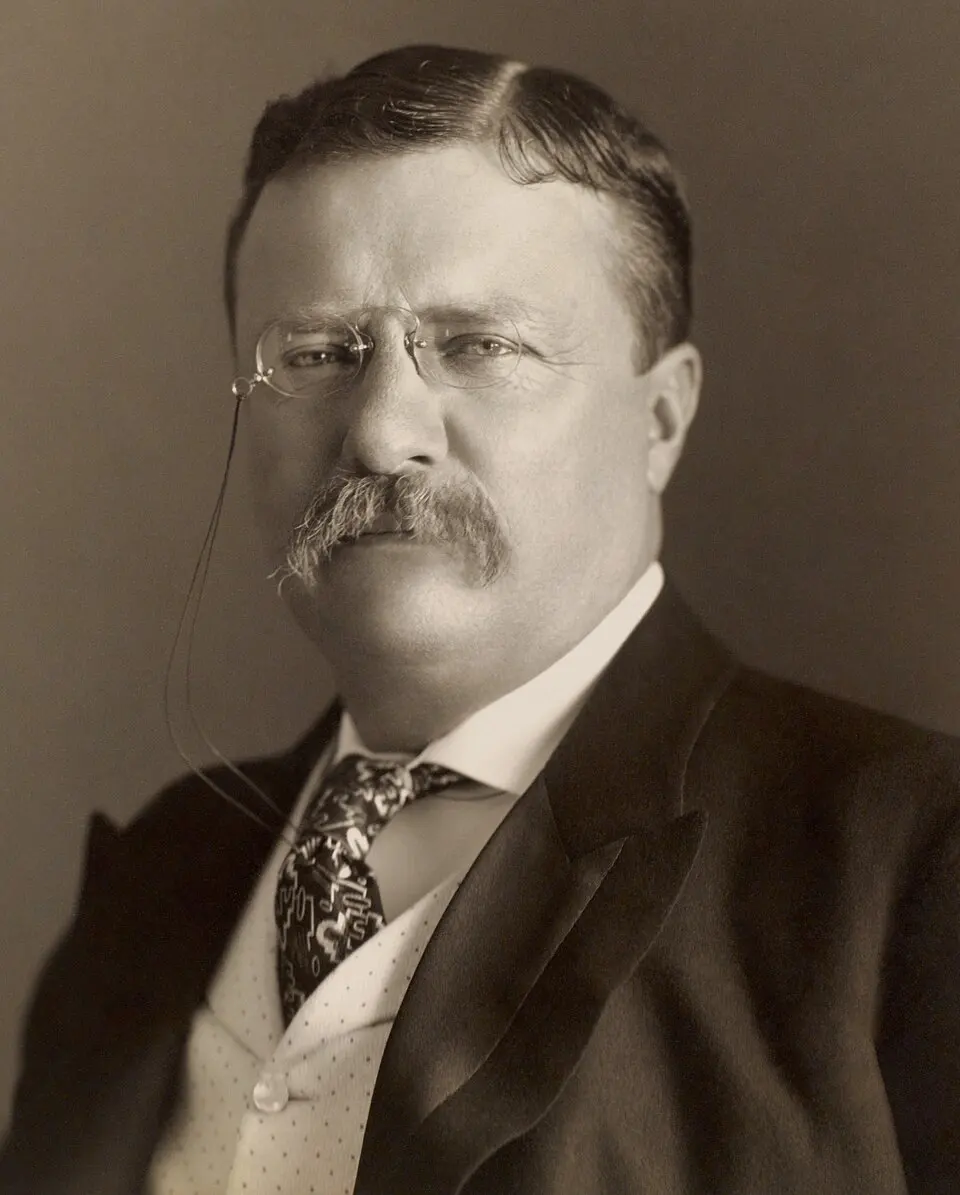
- 1901Theodore RooseveltThe Square Deal and conservationEra IV · 1901–1920
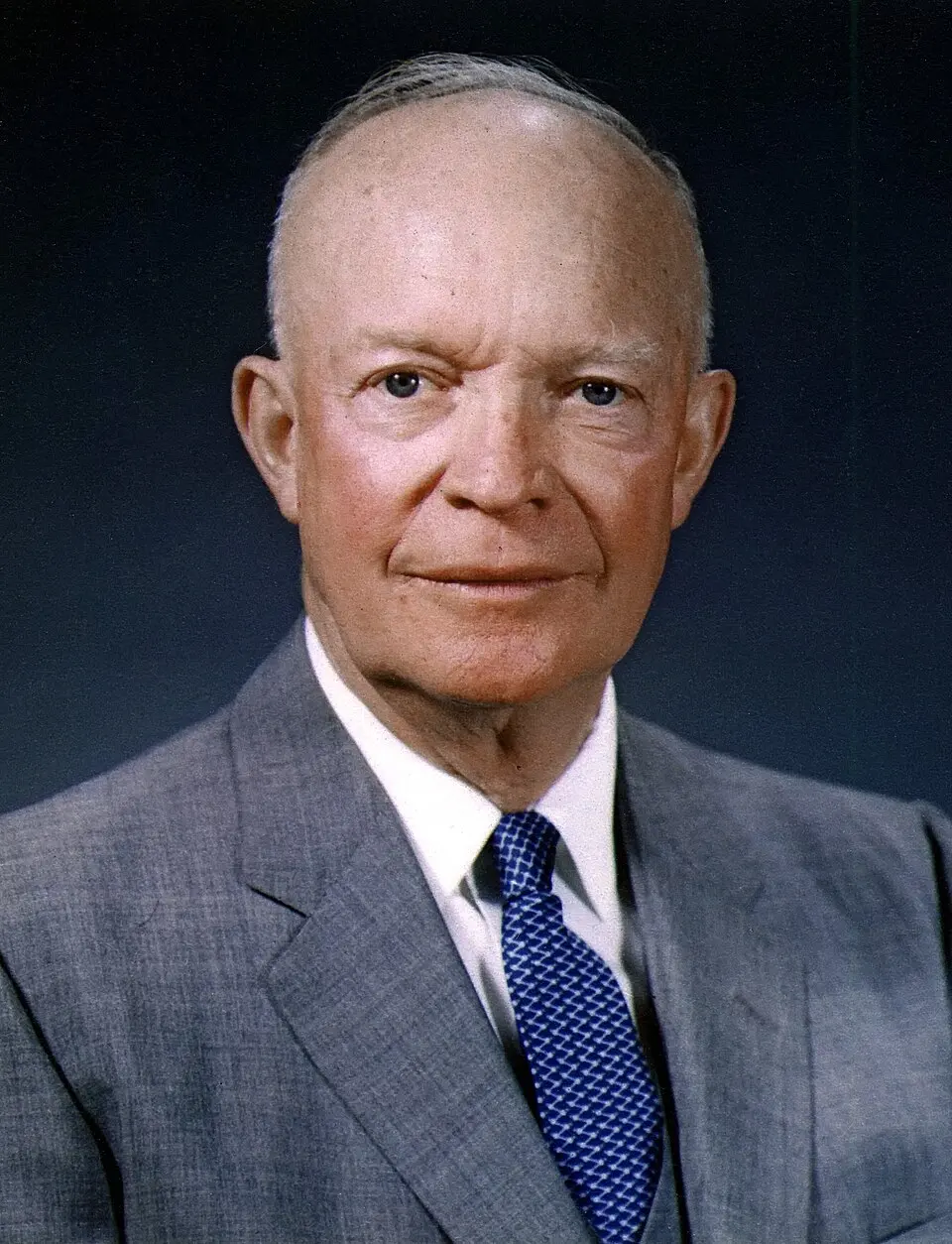
- 1953Dwight D. EisenhowerModern Republicanism in the Cold WarEra VI · 1953–1964
- 1964Barry GoldwaterThe conservative movement risesEra VII · 1964–1980
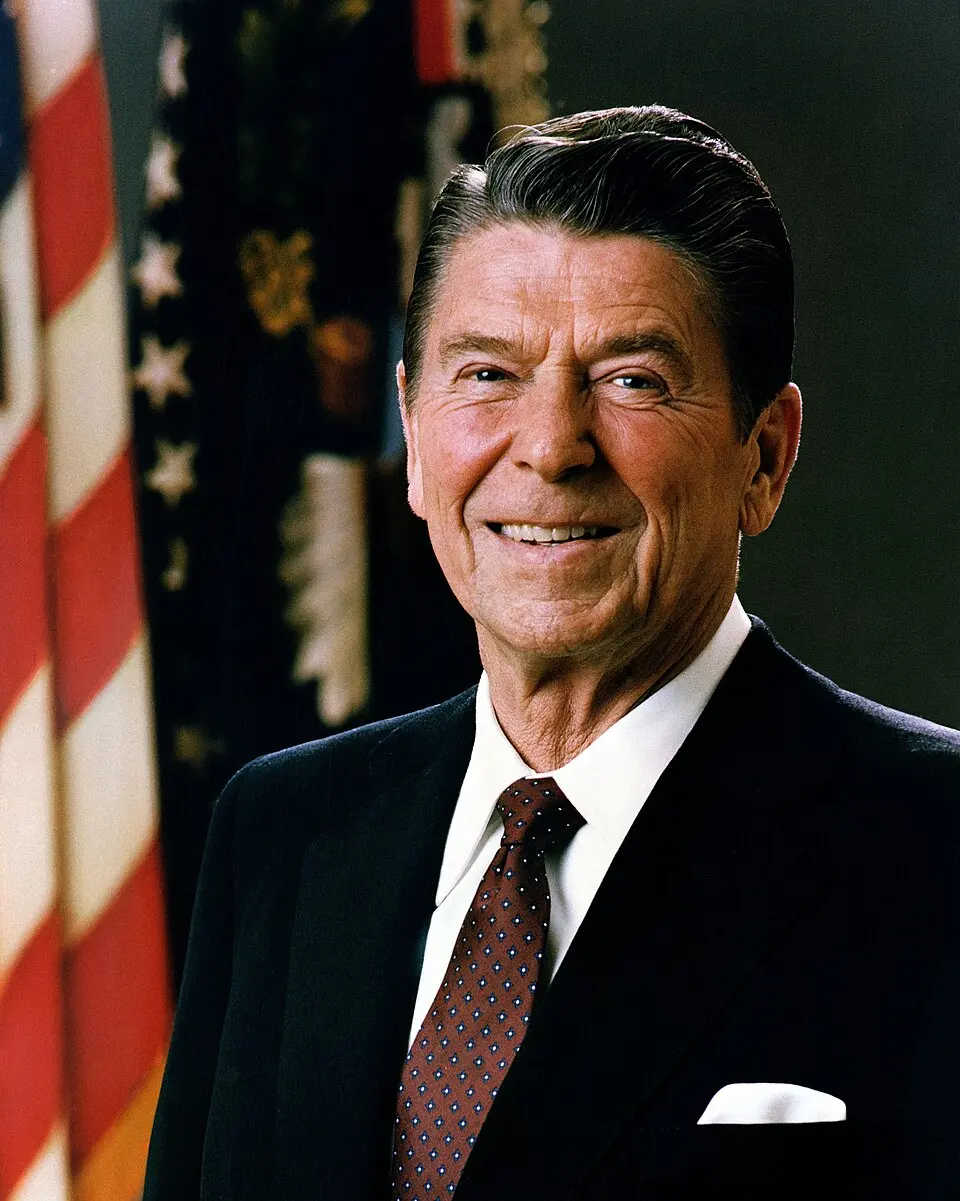
- 1981Ronald ReaganLimited government, peace through strengthEra VIII · 1981–1989
- 1989The Bush EraAfter the Cold War; after 9/11Era IX · 1989–2008
- 2009The Tea PartyA grassroots fiscal revoltEra X · 2009–2015
- 2016Donald J. TrumpMAGA and America FirstEra XI · 2015–present
Constitution & Liberty
The Rights That Make Us Free
Each right with its text, its ratification, the cases that shaped it and the arguments still made about it.
Amendment I · Ratified December 15, 1791
The First Amendment
Religion, speech, press, assembly, petition
“Congress shall make no law respecting an establishment of religion, or prohibiting the free exercise thereof; or abridging the freedom of speech, or of the press; or the right of …”
Primary SourceExplore
Amendment II · Ratified December 15, 1791
The Second Amendment
The right to keep and bear arms
“A well regulated Militia, being necessary to the security of a free State, the right of the people to keep and bear Arms, shall not be infringed.”
Primary SourceExplore
Amendment X · Ratified December 15, 1791
Federalism
Powers reserved to the states and the people
“The powers not delegated to the United States by the Constitution, nor prohibited by it to the States, are reserved to the States respectively, or to the people.”
Primary SourceExplore
Amendment XIV · Ratified July 9, 1868
Individual Liberty
Due process and equal protection
“No State shall make or enforce any law which shall abridge the privileges or immunities of citizens of the United States; nor shall any State deprive any person of life, liberty …”
Primary SourceExplore

Military & Veterans
Service & Sacrifice
From the Continental Army to Afghanistan and Iraq, with the service records, the archives and the resources veterans can use today.
1775–1783
American Revolution
Eight years of war that won independence for thirteen colonies and gave the new nation its first army, navy and Marines.
- Americans who served
- 217,000
- Battle deaths
- 4,435
1861–1865
Civil War
The war that preserved the Union and ended slavery—the deadliest conflict in American history.
- Union service members
- 2,213,363
- Union battle deaths
- 140,414
1917–1918
World War I
The United States entered the Great War in April 1917, and the American Expeditionary Forces helped bring about the Armistice of November 11, 1918.
- Americans who served (worldwide)
- 4,734,991
- Battle deaths
- 53,402
1941–1945
World War II
From Pearl Harbor to Tokyo Bay, more than 16 million Americans served in a global war against the Axis powers.
- Americans who served (worldwide)
- 16,112,566
- Battle deaths
- 291,557
1950–1953
Korean War
A three-year war to defend South Korea that ended in an armistice rather than a peace treaty—long called “the Forgotten War.”
- Americans who served (worldwide)
- 5,720,000
- Battle deaths
- 33,739
1964–1975
Vietnam War
A long Cold War conflict in Southeast Asia that cost more than 58,000 American lives and divided the nation at home.
- Americans who served (worldwide)
- 8,744,000
- Battle deaths
- 47,434
1990–1991
Persian Gulf War
Operations Desert Shield and Desert Storm, in which a U.S.-led international coalition liberated Kuwait from Iraqi occupation.
- Americans who served (worldwide)
- 2,224,997
- Battle deaths
- 148
2001–2021
Afghanistan, Iraq and the Post-9/11 Wars
After the attacks of September 11, 2001, Americans served for two decades in Afghanistan, Iraq and other theaters, including the longest war in U.S. history.
- U.S. service members who died
- More than 7,000
- Wounded in action
- More than 53,000
Faith & Religious Liberty
Free Exercise, No Establishment
Christian heritage and conservative religious thought, alongside the First Amendment. The same amendment protects the free exercise of every faith and keeps government from establishing any church.
“For happily the Government of the United States, which gives to bigotry no sanction, to persecution no assistance …”
Family & Community
The Institutions Closest to Home
The history of family policy, the debates over parental rights and education, and the local institutions that Tocqueville saw at the heart of American self-government.
“Americans of all ages, all conditions, and all dispositions, constantly form associations.”
The Archive
Primary Sources, Catalogued
Founding documents, statutes, speeches, court opinions and party platforms. Each entry names the institution that holds the original and carries a provenance label.
PM·DOC·1776·003Primary Source
The Declaration of Independence
Adopted by the Second Continental Congress two days after it voted for independence, the Declaration announced the separation of the thirteen colonies from Great Britain. Drafted chiefly by Thomas Jefferson for a committee that included John Adams, Benjamin Franklin, Roger Sherman and Robert R. Livingston, it grounded that separation in natural rights and government by consent, then set out a long list of grievances against King George III.
Held by National ArchivesOpen archive
PM·DOC·1863·027Primary Source
Emancipation Proclamation
Issued as “a fit and necessary war measure” one hundred days after Lincoln’s preliminary proclamation of September 22, 1862, the proclamation declared that all persons held as slaves in the states and parts of states then in rebellion “are, and henceforward shall be free.” It did not apply to the loyal border slave states or to several Union-occupied areas of the South, and it announced that freed men would be received into the armed service of the United States.
Held by National ArchivesOpen archive
PM·DOC·1863·029Primary Source
Gettysburg Address
At the dedication of the Soldiers’ National Cemetery at Gettysburg, Pennsylvania, Lincoln followed a two-hour oration by Edward Everett with remarks of fewer than 300 words. He described the war as a test of whether a nation “dedicated to the proposition that all men are created equal” could endure, and called on the living to resolve that the nation would have “a new birth of freedom.” Five manuscript copies in Lincoln’s hand survive, two of them at the Library of Congress; the Bliss copy, the only one he signed and dated, is the standard text and is engraved in the Lincoln Memorial.
Held by Library of CongressOpen archive
- Documents
- 66
- Eras
- 11
- Presidents
- 19
- Amendments
- 27
Media
Latest Publications
What “America First” Has Meant: 1920, 1940, 2016
Few phrases in American politics carry as much history. Presidents, a mass movement and insurgent campaigns have used it to mean different things, and Americans still disagree about what it should mean.
Historical Record
Reading the Second Amendment: Text, History and the Courts
Twenty-seven words, two clauses and more than two centuries of argument: what the text says, where it came from and how the Supreme Court has read it since 2008.
Historical Record
A Semiquincentennial Reading List
For the nation’s 250th year: the founding documents, the voices that held the country to its founding promise, and the classic books of the American conservative tradition.
PatriotMurica Commentary
Membership Plans
Join the Community, from $25 a month
Members get the Republican News Desk, the Midterms 2026 map, the Members’ Forum, live streams, private messages, their state chapter and a member card. Billed monthly, cancel any time. Membership is commercial and separate from any political activity, and we never build political profiles from what you read or buy.
- Digital$25/moThe news desk, the midterms map, the forum, live streams, your chapter and your digital member card.
- PatriotRecommended$60/moYour printed member card with printing included, member lectures and events, and 10% off the Shop.
- Heritage$150/moThe monthly Heritage Briefing, the annual publication in print, and 15% off with free shipping at the Shop.
PATRIOTMURICAAmerican Heritage • Liberty • ServiceMember since2026
Heritage MemberJane Q. CitizenNo. PM 2026 4827 1776
The Community
A Conservative Community, Online and Near You
Members talk it through in the forum, follow the Republican news of the day, meet in chapters in every state and county, and go live together.
- Patriot MembershipDigital, Patriot and Heritage plans, from $25 a month
- Members’ ForumA conservative and Republican forum, live all day
- Republican News DeskRepublican news and conservative headlines in one feed
- Chapters Near YouLocal chapters in every state and county
- Republican EventsParty events by state, with the civic calendar
- Live StreamsConservative live streams with a live chat
PatriotMurica Shop
Shop by Category
Goods of the American tradition: original designs from 1776 to We the People on tees, hoodies, hats, flags and mugs. No campaign merchandise.
Editorial Standards
Know What You Are Reading
Every item is labelled by its source. Party rhetoric is never presented as neutral historical fact, and our own commentary is always marked.
Primary Source
The original record, reproduced or linked from the institution that holds it. Primary sources show what people said and did in their own words.
Historical Record
Researched history written in our own words and limited to well-established facts. It is sourced to archives, historians of Congress and presidential scholarship.
Official GOP Position
What the Republican Party says, sourced directly to party platforms and official party documents. It records the party’s position and is not an independent conclusion.
Administration Position
What an administration says about its own priorities and record, sourced to White House or administration documents. Its judgments about its own success belong to the administration and are not historical conclusions.
PatriotMurica Commentary
The organization’s own interpretation and argument, clearly marked as opinion. Commentary never presents disputed claims as fact.
Opposing View / Debate
A major documented counterargument, criticism or controversy. Each side is described so its own proponents would recognize it.
PatriotMurica is independent. It is not affiliated with or endorsed by President Trump, the White House, the Republican National Committee, any candidate or campaign, or any agency of the U.S. Government. It does not solicit or accept political contributions.
Disclosures