Era IV · 1901–1920

Roosevelt and Republican Progressivism

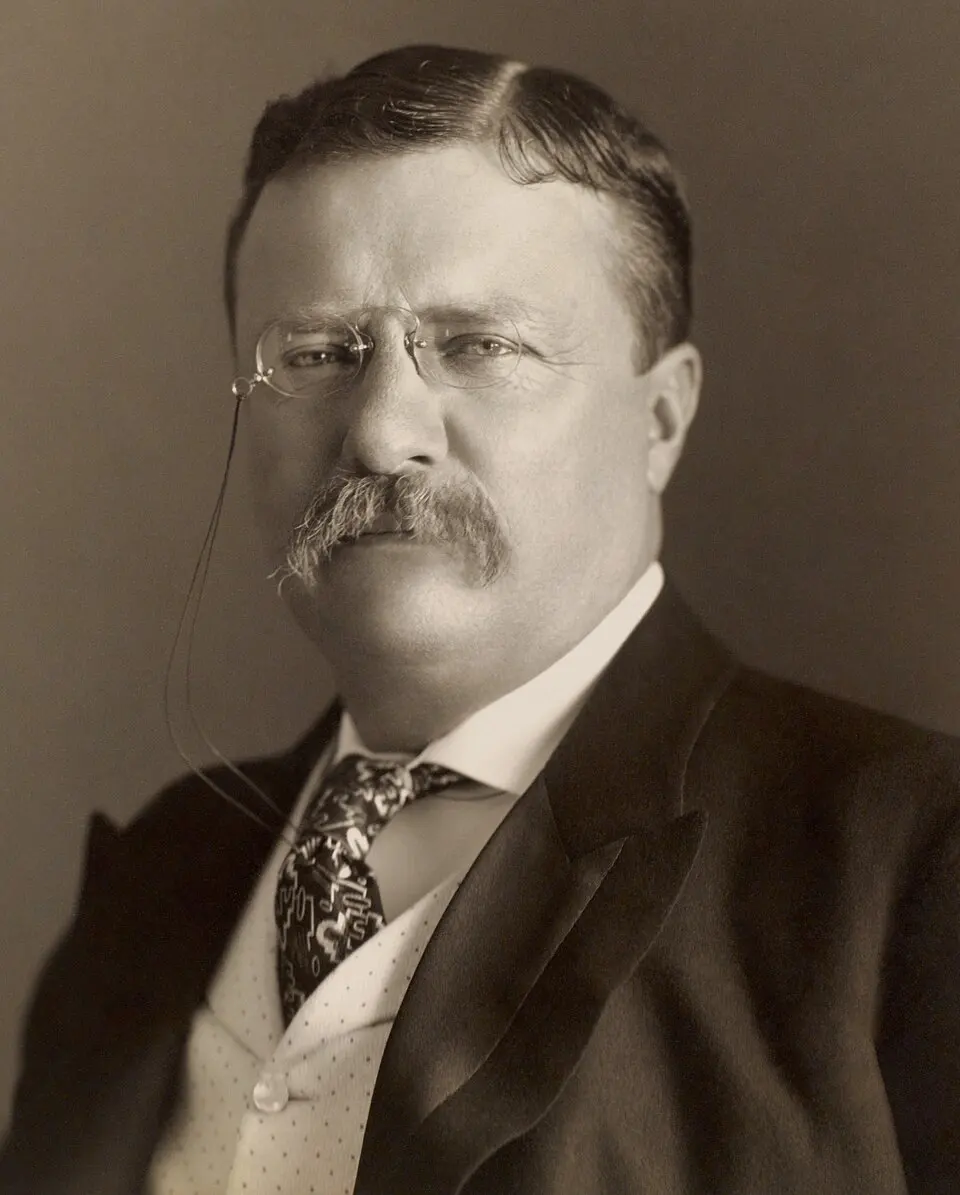
Theodore Roosevelt made the presidency an engine of reform—regulating corporations, protecting consumers and conserving public lands—before the party split in 1912 and reunited in opposition to Woodrow Wilson.

Overview

On September 6, 1901, an anarchist shot President William McKinley at the Pan-American Exposition in Buffalo. McKinley died eight days later, and Theodore Roosevelt, at 42, became the youngest president in the nation’s history. Roosevelt promised a “square deal” that would balance the interests of capital, labor and the public. His Justice Department revived the Sherman Antitrust Act against the Northern Securities railroad combination, which the Supreme Court ordered dissolved in 1904, and during the anthracite coal strike of 1902 he brought mine owners and union leaders to the White House and pressed them to accept arbitration. With Republican Congresses he strengthened railroad regulation through the Elkins Act of 1903 and the Hepburn Act of 1906, created a Department of Commerce and Labor, and in 1906 signed the Pure Food and Drug Act and the Meat Inspection Act.

Conservation became Roosevelt’s most enduring legacy. The Newlands Reclamation Act of 1902 funded irrigation in the arid West; in 1905 Roosevelt and Gifford Pinchot placed the forest reserves under a new U.S. Forest Service; and the Antiquities Act of 1906 let presidents proclaim national monuments, beginning with Devils Tower in Wyoming. According to the National Park Service, Roosevelt protected approximately 230 million acres of public land. Abroad, he supported Panama’s independence from Colombia and secured the rights to build the Panama Canal, announced a corollary to the Monroe Doctrine asserting an American “international police power” in the Western Hemisphere, and won the 1906 Nobel Peace Prize for mediating an end to the Russo-Japanese War.

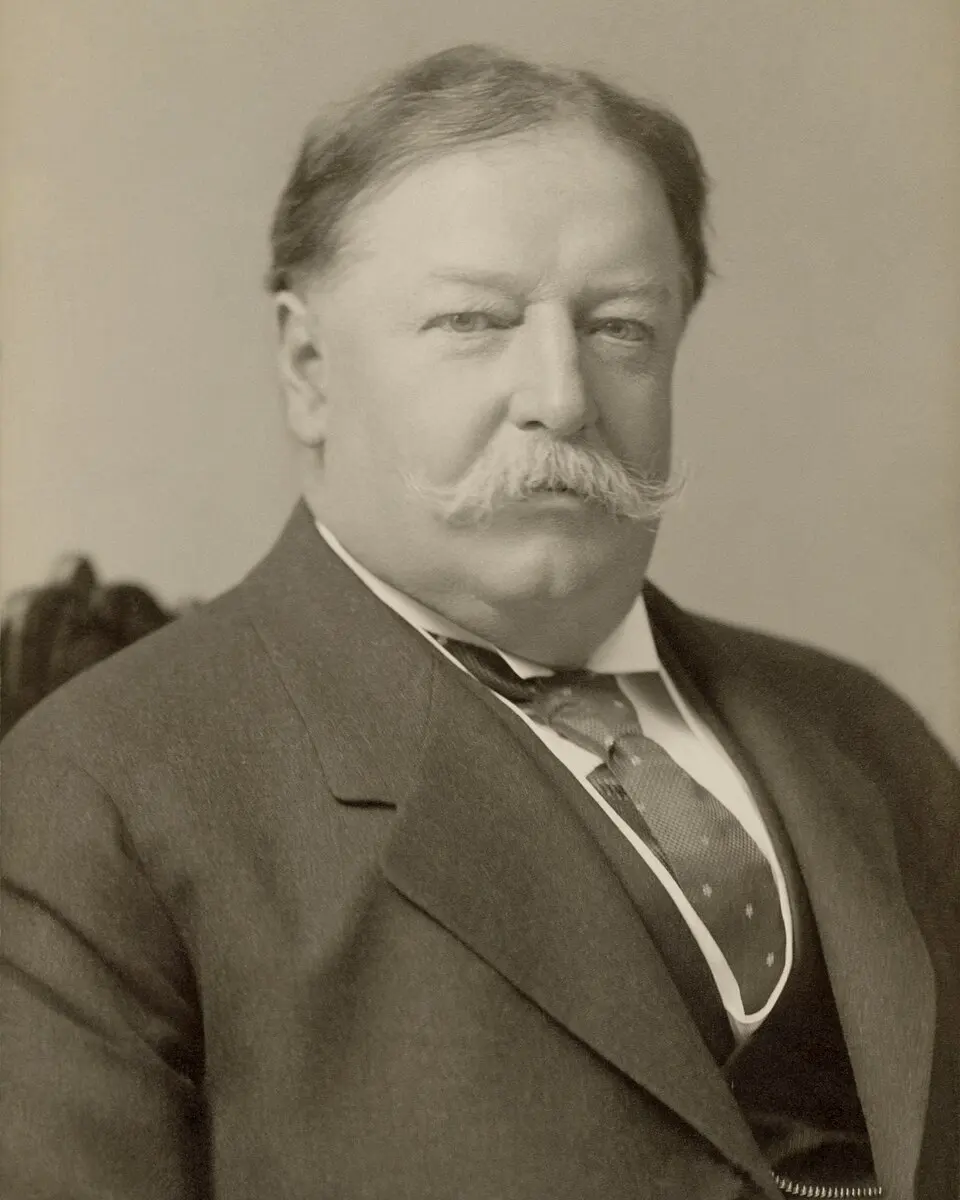
Roosevelt chose William Howard Taft as his successor, and Taft won easily in 1908. Taft’s Justice Department brought more antitrust prosecutions than Roosevelt’s, including the cases that broke up Standard Oil and American Tobacco in 1911, and Congress proposed the Sixteenth Amendment, authorizing an income tax, and the Seventeenth, providing for the direct election of senators. But Taft alienated the party’s progressive wing by signing the Payne–Aldrich Tariff of 1909, which made only modest reductions, and by dismissing Chief Forester Pinchot after his public attacks on Interior Secretary Richard Ballinger. In 1910 insurgent Republicans joined Democrats to strip Speaker Joseph G. Cannon of his control of the Rules Committee, and that August Roosevelt outlined his “New Nationalism” at Osawatomie, Kansas, calling for a national government strong enough to regulate corporations and protect workers.

The breach became a split in 1912. Roosevelt challenged Taft and won most of the new presidential primaries, but Taft’s supporters controlled the convention and seated their delegates in most contested cases. Roosevelt’s followers formed the Progressive, or “Bull Moose,” Party and nominated him in August on a platform of social and political reform. The division elected Democrat Woodrow Wilson; Roosevelt finished second, the strongest showing by a third-party candidate in American history, and Taft carried only Utah and Vermont. Republicans reunited behind Charles Evans Hughes in 1916 and lost narrowly, but that year Montana elected Jeannette Rankin as the first woman in Congress, and in 1918 the party regained both houses. Majority Leader Henry Cabot Lodge insisted on reservations to the Treaty of Versailles; with Wilson urging Democrats to reject them and “irreconcilables” opposing any League of Nations, the Senate rejected the treaty in November 1919 and again in March 1920. In June 1919 the Republican Congress sent the Nineteenth Amendment to the states, and it was ratified in August 1920.

Timeline

  1. Roosevelt becomes president

    William McKinley dies eight days after being shot by an anarchist at the Pan-American Exposition in Buffalo, and Theodore Roosevelt, 42, becomes the youngest president in the nation’s history.

    Historical Record
  2. Settling the anthracite coal strike

    With a months-long strike threatening winter fuel supplies, Roosevelt brings mine owners and union leaders to the White House. Faced with his plan to take over the mines if necessary, both sides agree to arbitration by a presidential commission, and Roosevelt calls the result a “square deal.”

    Historical Record
  3. Northern Securities Co. v. United States

    By 5 to 4, the Supreme Court upholds the Roosevelt administration’s antitrust suit and orders the dissolution of the railroad holding company formed by J. P. Morgan, James J. Hill and E. H. Harriman.

    Primary Source
  4. U.S. Forest Service established

    Roosevelt signs the Transfer Act moving the forest reserves from the Interior Department to the Department of Agriculture, where Gifford Pinchot’s forestry bureau becomes the Forest Service.

    Historical Record
  5. Antiquities Act

    The law lets presidents proclaim national monuments on federal land to protect historic and scientific sites. Roosevelt uses it first at Devils Tower, Wyoming, that September, and proclaims eighteen monuments in all.

    Primary Source
  6. Pure Food and Drug Act and Meat Inspection Act

    After Upton Sinclair’s The Jungle exposes conditions in Chicago packinghouses, Roosevelt signs laws barring adulterated and misbranded foods and drugs from interstate commerce and requiring federal inspection of meat.

    Primary Source
  7. Payne–Aldrich Tariff

    Taft signs a tariff that makes only modest reductions, angering Midwestern progressives who had expected deeper cuts. He later defends it as the best tariff the party had ever passed.

    Historical Record
  8. Revolt against Speaker Cannon

    Led by George W. Norris of Nebraska, insurgent Republicans join Democrats to remove Speaker Joseph G. Cannon from the Rules Committee and enlarge it, 191 to 156, sharply curbing the power of the speakership.

    Historical Record
  9. The New Nationalism

    At Osawatomie, Kansas, Roosevelt calls for a national government strong enough to regulate corporations, protect workers and conserve resources, declaring that “the object of government is the welfare of the people.”

    Primary Source
  10. The party splits; the Bull Moose Party is born

    After Taft’s supporters control the Republican convention in June, Roosevelt’s followers form the Progressive Party and nominate him in August, with Governor Hiram Johnson of California, on a platform endorsing women’s suffrage, direct primaries, a minimum wage for working women and social insurance.

    Historical Record
  11. Sixteenth and Seventeenth Amendments ratified

    Proposed by Congress in 1909 and 1912, the amendments authorize a federal income tax without apportionment among the states and provide for the direct popular election of senators.

    Primary Source
  12. Jeannette Rankin votes against war

    Sworn in four days earlier as the first woman in Congress, the Montana Republican is among fifty representatives who vote against declaring war on Germany.

    Historical Record
  13. Senate rejects the Treaty of Versailles

    With Wilson urging Democrats to oppose Lodge’s reservations and the irreconcilables opposing any League of Nations, the Senate rejects a peace treaty for the first time in its history. A second attempt fails in March 1920.

    Historical Record
  14. Nineteenth Amendment ratified

    Tennessee completes ratification of the woman suffrage amendment, first introduced in Congress in 1878 and passed by the Republican-controlled Congress in June 1919.

    Primary Source

People

  • President, 1901–1909; Progressive Party nominee, 1912

  • President, 1909–1913; later chief justice of the United States

  • First chief of the U.S. Forest Service, 1905–1910

    Gifford Pinchot

    Roosevelt’s partner in conservation; his dismissal by Taft helped split the party.

  • Governor (1901–1906) and senator (1906–1925) from Wisconsin

    Robert M. La Follette

    Leader of the insurgent progressives, champion of direct primaries and railroad regulation, and an opponent of entry into World War I.

  • Senator from Rhode Island; chairman of the Finance Committee

    Nelson W. Aldrich

    Leader of the conservative “Old Guard” and co-author of the 1909 tariff; later chaired the National Monetary Commission.

  • Representative (1903–1913) and senator (1913–1943) from Nebraska

    George W. Norris

    Led the 1910 revolt against Speaker Cannon.

  • Governor of New York, Supreme Court justice and 1916 Republican nominee

    Charles Evans Hughes

    Resigned from the Court to run for president; later secretary of state and chief justice.

  • Representative from Montana, 1917–1919

    Jeannette Rankin

    The first woman elected to Congress, four years before the Nineteenth Amendment.

  • Senator from Massachusetts; majority leader and Foreign Relations chairman from 1919

    Henry Cabot Lodge

    Led the reservationists in the fight over the Treaty of Versailles.

  • Senator from Idaho, 1907–1940

    William E. Borah

    A leading “irreconcilable” opponent of the League of Nations.

Documents

Elections

YearElectionResultElectoral votes
1904Election of 1904Roosevelt won a full term in his own right with about 56 percent of the popular vote, and announced that he would not seek another term in 1908.Theodore Roosevelt (R) defeats Alton B. Parker (D)336 of 476
1908Election of 1908Roosevelt’s chosen successor won comfortably, defeating Bryan in his third and final presidential campaign.William Howard Taft (R) defeats William Jennings Bryan (D)321 of 483
19101910 Midterm ElectionsDivisions between progressive insurgents and the Old Guard, and anger over the Payne–Aldrich Tariff, ended the Republican House majority that had lasted since 1895.Democrats win the House—
1912Election of 1912With the Republican vote divided, Wilson won with about 42 percent of the popular vote. Roosevelt took about 27 percent and 88 electoral votes; Taft took about 23 percent and carried only Utah and Vermont.Woodrow Wilson (D) defeats Theodore Roosevelt (Progressive), William Howard Taft (R) and Eugene V. Debs (Socialist)435 of 531
1916Election of 1916The reunited Republicans nearly won: Wilson carried California, and with it the election, by fewer than 4,000 votes.Woodrow Wilson (D) defeats Charles Evans Hughes (R)277 of 531
19181918 Midterm ElectionsDespite Wilson’s appeal for a Democratic Congress, Republicans won majorities in both chambers, making Henry Cabot Lodge chairman of the Foreign Relations Committee as the peace treaty reached the Senate.Republicans win both houses of Congress—

Policies

  • 1902–1913

    Antitrust enforcement

    Roosevelt revived the Sherman Act against the Northern Securities combination and other trusts, distinguishing between combinations to be regulated and those to be broken up. Taft’s administration brought even more suits, winning the breakup of Standard Oil and American Tobacco in 1911.

    Historical Record
  • 1901–1909

    Conservation of public lands

    According to the National Park Service, Roosevelt protected approximately 230 million acres of public land, including 150 national forests, 51 federal bird reserves, 4 national game preserves, 5 national parks and 18 national monuments.

    Historical Record
  • 1906

    Food and drug safety

    The Pure Food and Drug Act and the Meat Inspection Act, both signed June 30, 1906, laid the foundations of federal consumer protection and of today’s Food and Drug Administration.

    Primary Source
  • 1903–1910

    Railroad regulation

    The Elkins Act of 1903 outlawed railroad rebates, the Hepburn Act of 1906 empowered the Interstate Commerce Commission to set maximum rates, and the Mann–Elkins Act of 1910 extended its authority to telephone and telegraph companies.

    Historical Record
  • 1909–1913

    Income tax and direct election of senators

    Congress proposed the Sixteenth Amendment in 1909 and the Seventeenth in 1912; both were ratified in 1913, the first amendments added to the Constitution since Reconstruction.

    Primary Source
  • 1903–1914

    The Panama Canal

    After Panama declared independence from Colombia in November 1903 with American naval support, the United States secured the rights to build a canal across the isthmus. It opened in August 1914.

    Historical Record
  • 1912

    The Progressive program

    The Progressive Party pledged equal suffrage for women, direct primaries and nationwide presidential primaries, the initiative, referendum and recall, minimum wage standards for working women, an end to child labor and a system of social insurance against sickness, unemployment and old age.

    Primary Source
  • 1878–1920

    Woman suffrage

    First introduced in Congress in 1878 by Senator Aaron A. Sargent, a California Republican, the suffrage amendment passed the Republican-controlled 66th Congress in June 1919 and was ratified in August 1920.

    Historical Record

Speeches

  • September 5, 1901

    Speech at the Pan-American Exposition

    William McKinley

    In his last speech, delivered in Buffalo the day before he was shot, McKinley endorsed reciprocal trade agreements to open foreign markets to American goods.

    “The period of exclusiveness is past. The expansion of our trade and commerce is the pressing problem.”
    Primary Source
  • April 14, 1906

    “The Man with the Muck-Rake”

    Theodore Roosevelt

    Speaking at the laying of the cornerstone of the House office building, Roosevelt praised honest exposure of wrongdoing while warning against indiscriminate sensationalism, giving the word “muckraker” its lasting meaning.

    “The men with the muck-rakes are often indispensable to the well-being of society; but only if they know when to stop raking the muck”
    Primary Source
  • August 31, 1910

    The New Nationalism

    Theodore Roosevelt

    Delivered at the dedication of a memorial at Osawatomie, Kansas, the speech set out the program Roosevelt would carry into the 1912 campaign.

    “The object of government is the welfare of the people.”
    Primary Source
  • August 6, 1912

    “A Confession of Faith”

    Theodore Roosevelt

    Roosevelt’s address to the Progressive National Convention in Chicago, which closed by repeating the words he had used in June on the eve of the Republican convention.

    “We stand at Armageddon, and we battle for the Lord.”
    Primary Source
  • February 28, 1919

    Speech on the League of Nations

    Henry Cabot Lodge

    Lodge opened the Senate debate over Wilson’s draft covenant for a League of Nations, the first step in the Republican campaign that ended in the treaty’s defeat.

    Primary Source

Criticism & Debate

A historical institution earns trust by recording disagreement. It does not rewrite history around what a movement believes today. Each perspective below is stated in terms its own proponents would recognize.

Opposing View / Debate

Progressive reform or constitutional restraint?

Between 1906 and 1912 the party divided between progressive “insurgents” and the conservative “Old Guard” over tariffs, regulation, the power of party leaders and proposals for more direct democracy.

Progressives and insurgents

Insurgents such as La Follette and Norris, and increasingly Roosevelt, argued that concentrated corporate wealth threatened self-government and equal opportunity and that a stronger national government was needed to restore popular control. They pressed for downward tariff revision, direct primaries and the initiative, referendum and recall; in 1912 Roosevelt proposed letting voters override certain state court rulings.

The Old Guard and Taft

Aldrich, Cannon and, by 1912, Taft argued that the Constitution’s limits, an independent judiciary and the security of property were the foundations of liberty and prosperity, that the protective tariff sustained American wages, and that proposals such as the recall of judicial decisions threatened the rule of law.

Historians

Historians note that both factions claimed the party’s heritage—the progressives its activist nationalism, the conservatives its defense of property and constitutional order—and that the 1912 split helped give Democrats the presidency and both houses of Congress.

Sources

  1. Theodore Roosevelt: Campaigns and Elections · Miller Center, University of Virginia
Opposing View / Debate

How much power should a president exercise?

Roosevelt and Taft set out opposing theories of executive power that are still cited in debates today.

Roosevelt’s stewardship theory

In his 1913 autobiography Roosevelt described the president as a steward of the people, with not only the right but the duty to do anything the needs of the nation demanded unless the Constitution or the laws forbade it.

Taft’s constitutional view

In lectures published in 1916 as Our Chief Magistrate and His Powers, Taft argued that a president may exercise only powers that can be fairly traced to a specific grant in the Constitution or an act of Congress, and that there is no undefined reservoir of power to be used whenever a president thinks it in the public interest.

Later commentators

Scholars and judges have used the two views to frame arguments over executive power ever since; in the 1952 steel-seizure case, for example, the Supreme Court rejected President Truman’s claim of inherent authority to seize the nation’s steel mills.

Opposing View / Debate

Should the United States join the League of Nations?

After World War I the Republican Senate divided over the Treaty of Versailles and its covenant for a League of Nations, and Wilson refused to accept the Republican majority’s terms.

Reservationists

Lodge and most Republican senators were willing to approve the treaty with reservations—above all to Article X’s pledge to preserve members’ territorial integrity—in order to protect Congress’s power to declare war, the Monroe Doctrine and American sovereignty.

Irreconcilables

A bloc including William E. Borah, Hiram Johnson and Robert La Follette opposed membership in the League on any terms, arguing that it would entangle the nation in foreign quarrels and surrender its independence of action.

Wilson and treaty supporters

Wilson and most Democrats, joined by internationalist Republicans such as former President Taft, argued that collective security through the League offered the best hope of preventing another world war. Wilson urged Democrats to reject the Lodge reservations, and the treaty failed in November 1919 and March 1920.

Opposing View / Debate

Did Progressive-era Republicans abandon Black Americans?

The party of emancipation kept the loyalty of most Black voters who could still vote, but its leaders did little to resist disfranchisement and segregation in these years.

Critics

Black leaders and newspapers condemned Roosevelt’s 1906 discharge without honor of 167 Black soldiers after a shooting in Brownsville, Texas—an action the Army reversed in 1972—and the 1912 Progressive convention’s decision to exclude Black delegations from several Southern states. Some, including W. E. B. Du Bois, helped found the NAACP in 1909 and questioned whether Black voters owed the Republicans their loyalty.

Defenders

Roosevelt’s defenders point to his 1901 White House dinner with Booker T. Washington, his appointment of William D. Crum as collector of the port of Charleston over Southern opposition, and his insistence that the door of opportunity should not be shut on anyone because of race. Republicans in Congress also led later efforts for a federal anti-lynching law.

Sources

  1. Theodore Roosevelt: Domestic Affairs · Miller Center, University of Virginia

Images

Archival image collections. Rights are checked item by item before anything is reproduced on this site.

Sources

Sources

  1. Timeline of Theodore Roosevelt’s Life: 1911 to 1919 · Library of Congress
  2. Theodore Roosevelt and Conservation · National Park Service, Theodore Roosevelt National Park
  3. Theodore Roosevelt: Campaigns and Elections · Miller Center, University of Virginia
  4. William Taft: Domestic Affairs · Miller Center, University of Virginia
  5. Landmark Legislation: Seventeenth Amendment · U.S. Senate
  6. Senate Rejects the Treaty of Versailles · U.S. Senate
  7. RANKIN, Jeannette · U.S. House of Representatives: History, Art & Archives
  8. 19th Amendment to the U.S. Constitution: Women’s Right to Vote (1920) · National Archives

Related

Continue in the Archive