The Republican Story
Republican History, 1854 to Today
The party was founded in 1854 to stop the expansion of slavery. Over the next 170 years it was the party of Lincoln and Reconstruction, of Theodore Roosevelt’s progressives, of Eisenhower’s modern Republicanism, of the Goldwater–Reagan conservative movement and of Trump’s America First. These were different movements, and this archive records how the party changed, including the criticism.
- Eras
- 11
- Presidents
- 19
- Library documents
- 50
- Debates recorded
- 45
Showing Era I: Formation, 1854–1860
Era I · 1854–1860
Formation
Born in Northern protest against the Kansas–Nebraska Act, a coalition of former Whigs, Free Soilers, antislavery Democrats and some Know-Nothings became, in six years, the party that elected Abraham Lincoln.
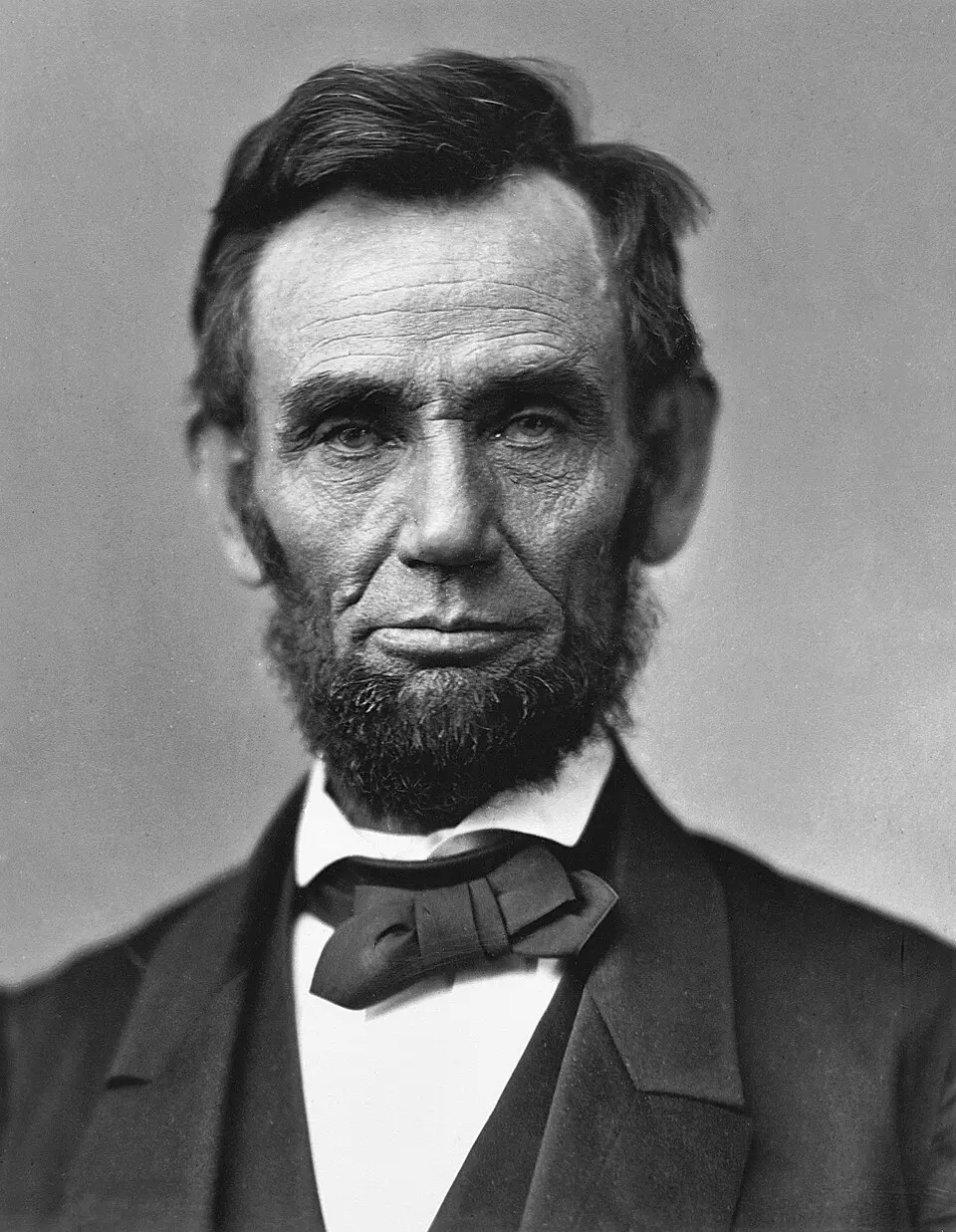
The Republican Party began as a protest. In January 1854 Senator Stephen A. Douglas of Illinois, a Democrat, proposed organizing the Nebraska country on the principle of “popular sovereignty,” leaving settlers to decide whether to permit slavery. Antislavery members of Congress led by Senator Salmon P. Chase of Ohio answered with the “Appeal of the Independent Democrats,” and when President Franklin Pierce signed the Kansas–Nebraska Act on May 30, 1854, it repealed the Missouri Compromise line of 1820, which had barred slavery from the Louisiana Purchase lands north of 36°30′ outside Missouri. Across the North, “anti-Nebraska” meetings drew former Whigs, Free Soilers, antislavery Democrats and many members of the nativist American, or Know-Nothing, movement. Two gatherings are most often remembered as the party’s birthplace: a meeting in a schoolhouse at Ripon, Wisconsin, on March 20, 1854, where Alvan E. Bovay suggested the name “Republican,” and a mass convention “Under the Oaks” at Jackson, Michigan, on July 6, 1854, which adopted the name and nominated a statewide ticket.
The new party grew with remarkable speed. In the congressional elections of 1854 and 1855 the Democrats lost their House majority, falling from 157 seats to 83, and in February 1856 the anti-Nebraska forces elected Nathaniel P. Banks of Massachusetts Speaker after 133 ballots. Violence in “Bleeding Kansas” and the May 1856 beating of Senator Charles Sumner at his Senate desk hardened Northern opinion. The first Republican National Convention, meeting in Philadelphia in June 1856, nominated the explorer John C. Frémont on a platform declaring that Congress had both the right and the duty to prohibit slavery in the territories. Campaigning under the slogan “Free Soil, Free Speech, Free Men, and Frémont,” he carried eleven of the sixteen free states—a striking showing for a party barely two years old—though the Democrat James Buchanan won the presidency.
Protest meeting at Ripon, Wisconsin
Opponents of the Nebraska bill meet in a schoolhouse in Ripon, where organizer Alvan E. Bovay suggests that a new party would take the name “Republican.” Ripon is one of several towns that claim to be the party’s birthplace.
Historical RecordKansas–Nebraska Act becomes law
President Franklin Pierce signs the act organizing Kansas and Nebraska territories under popular sovereignty, repealing the Missouri Compromise restriction on slavery north of 36°30′.
Primary Source“Under the Oaks” at Jackson, Michigan
A crowd too large for any hall meets in an oak grove outside Jackson, adopts the Republican name and nominates a statewide ticket. That November, Kinsley S. Bingham is elected governor of Michigan on the Republican ticket.
Historical RecordBanks elected Speaker after 133 ballots
After a two-month deadlock, the House adopts a plurality rule and elects Nathaniel P. Banks of Massachusetts, the candidate of the anti-Nebraska forces, over William Aiken of South Carolina by 103 to 100—an early sign of the new coalition’s strength.
Historical RecordSenator Charles Sumner beaten in the Senate chamber
Days after Sumner’s “Crime Against Kansas” speech, Representative Preston Brooks of South Carolina beats him with a cane at his desk. Sumner is absent from the Senate for most of the next three years, and the assault becomes a rallying point for Northern Republicans.
Historical RecordFirst Republican National Convention
Meeting in Philadelphia, delegates nominate John C. Frémont and William L. Dayton on a platform affirming Congress’s power to prohibit slavery in the territories and calling for the immediate admission of Kansas as a free state.
Historical RecordDred Scott v. Sandford
Chief Justice Roger B. Taney’s opinion holds that people of African descent could not be U.S. citizens and that Congress lacked power to prohibit slavery in the territories—rejecting the central plank of the Republican platform.
Primary SourceLincoln’s “House Divided” speech
Accepting the Illinois Republican convention’s endorsement for the U.S. Senate, Lincoln argues that the government cannot endure “permanently half slave and half free.”
Primary SourceThe Lincoln–Douglas debates
Lincoln and Douglas meet in seven Illinois towns, from Ottawa to Alton, debating slavery in the territories and the meaning of the Declaration of Independence. The Democratic legislature returns Douglas to the Senate, but Lincoln emerges as a national figure.
Historical RecordJohn Brown’s raid on Harpers Ferry
The abolitionist John Brown seizes the federal armory at Harpers Ferry, Virginia, hoping to spark an uprising of enslaved people. Republican leaders disavow the raid, and the party’s 1860 platform condemns armed invasion of any state “as among the gravest of crimes,” but many Southerners hold the party responsible.
Historical RecordCooper Union Address
In New York City, Lincoln argues from the votes of the Constitution’s signers that the founders believed Congress could regulate slavery in the federal territories, and answers the charge that Republicans are a sectional party.
Primary SourceLincoln nominated at the Wigwam
At Chicago, Lincoln overtakes the front-runner, Senator William H. Seward of New York, and wins the nomination on the third ballot. Hannibal Hamlin of Maine is named for vice president.
Historical RecordLincoln elected president
Lincoln wins 180 of 303 electoral votes, carrying every free state except New Jersey, which divides its electors. He receives no electoral votes from the slave states.
Historical RecordSouth Carolina secedes
Pointing to the election of a president it considered hostile to slavery, a South Carolina convention declares the state’s withdrawal from the Union. Six more Deep South states follow by February 1861.
Historical Record
How to read the record
Fact, Position, Commentary, Debate
Each entry carries a label. A party platform records what the party said. An administration’s account of its own record records what the administration said. Neither is presented as an independent historical conclusion.
The original record, reproduced or linked from the institution that holds it. Primary sources show what people said and did in their own words.
Researched history written in our own words and limited to well-established facts. It is sourced to archives, historians of Congress and presidential scholarship.
What the Republican Party says, sourced directly to party platforms and official party documents. It records the party’s position and is not an independent conclusion.
What an administration says about its own priorities and record, sourced to White House or administration documents. Its judgments about its own success belong to the administration and are not historical conclusions.
The organization’s own interpretation and argument, clearly marked as opinion. Commentary never presents disputed claims as fact.
A major documented counterargument, criticism or controversy. Each side is described so its own proponents would recognize it.