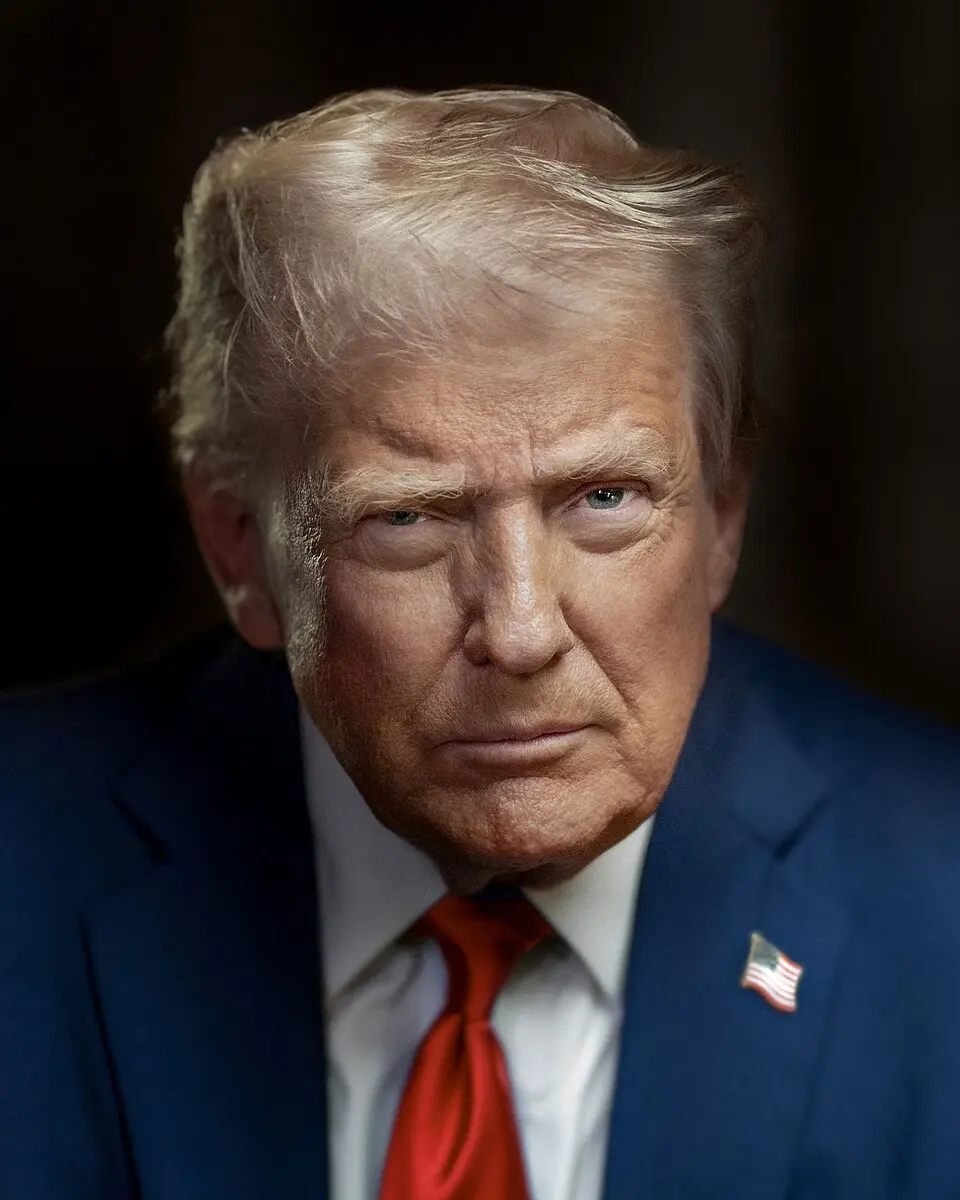
Era XI · 2015–present

Trump, MAGA and America First

Donald J. Trump’s “America First” movement remade the Republican Party around trade protection, immigration enforcement and a populist appeal to working-class voters—and divided Americans, and Republicans, more sharply than any figure in modern politics.

Overview

Donald J. Trump, a New York real-estate developer and television personality who had never held public office, announced his candidacy on June 16, 2015, and won the 2016 Republican nomination over sixteen rivals. Campaigning under the slogan “Make America Great Again”—an echo of Ronald Reagan’s 1980 slogan—he broke with party orthodoxy on trade, immigration and foreign intervention, promising tariffs, a wall on the southern border, an end to what he called endless wars and the protection of Social Security and Medicare. He lost the national popular vote to Hillary Clinton by about 2.9 million votes but won the Electoral College by carrying Pennsylvania and Michigan, which no Republican had won since 1988, and Wisconsin, which none had won since 1984, while Republicans held both houses of Congress.

His first term produced major conservative achievements and constant conflict. Trump appointed three Supreme Court justices—Neil Gorsuch, Brett Kavanaugh and Amy Coney Barrett—and more than 200 other federal judges; signed the Tax Cuts and Jobs Act and the bipartisan First Step Act; created the Space Force; replaced NAFTA with the United States–Mexico–Canada Agreement; moved the U.S. embassy in Israel to Jerusalem; and brokered the Abraham Accords between Israel and several Arab states. He imposed tariffs on steel, aluminum and hundreds of billions of dollars of Chinese goods and withdrew from the Paris climate agreement and the Iran nuclear deal. A special counsel investigated Russian interference in the 2016 election, and in December 2019 the House impeached Trump over his dealings with Ukraine; the Senate acquitted him in February 2020. The COVID-19 pandemic dominated his final year, as Operation Warp Speed accelerated vaccines that were authorized in December 2020.

Trump lost the 2020 election to Joe Biden, 306 electoral votes to 232 and by about 7 million popular votes. He refused to concede, alleging widespread fraud; courts, state election officials of both parties and his own attorney general found no fraud that could have changed the result. On January 6, 2021, after he urged supporters at a rally near the White House to march to the Capitol, a mob breached the building and interrupted the counting of electoral votes. The House impeached him a second time, for incitement of insurrection, and 57 senators, including seven Republicans, voted to convict—short of the two-thirds required. The episode opened deep divisions among Republicans.

Out of office, Trump remained the party’s dominant figure. Justices he appointed formed the majorities in Dobbs v. Jackson Women’s Health Organization, which overturned Roe v. Wade, and in landmark Second Amendment and religious-liberty decisions in 2022. He was indicted four times in 2023 and convicted in New York in May 2024; he survived an assassination attempt in Butler, Pennsylvania, on July 13, 2024; and, with Senator JD Vance of Ohio as his running mate, he won the 2024 election with 312 electoral votes and a plurality of the popular vote—the first Republican popular-vote victory since 2004—while Republicans won the Senate and held the House. Inaugurated on January 20, 2025, as the 47th president, he became the second president, after Grover Cleveland, to serve non-consecutive terms. His second term opened with an expansive use of executive power over immigration, trade and the federal workforce and with the One Big Beautiful Bill Act of July 2025. Those actions have been contested in Congress and the courts: in 2026 the Supreme Court held that the emergency-powers statute he had invoked does not authorize tariffs, upheld his power to remove a member of the Federal Trade Commission, and held that children born in the United States to parents unlawfully or temporarily present are citizens at birth.

Timeline

  1. Trump announces his candidacy

    At Trump Tower in New York, Donald J. Trump enters the Republican race, attacking trade deals and illegal immigration and promising to build a wall on the southern border. Initially dismissed by many party leaders and commentators, he led national primary polls within weeks.

    Historical Record
  2. Trump inaugurated as the 45th president

    Declaring that “the forgotten men and women of our country will be forgotten no longer,” Trump promises that decisions on trade, taxes, immigration and foreign affairs will be made to benefit American workers and families: “From this day forward, it’s going to be only America first.”

    Primary Source
  3. Tax Cuts and Jobs Act signed

    Passed without a Democratic vote, the law cuts the corporate tax rate from 35 to 21 percent, lowers individual rates, nearly doubles the standard deduction and caps the deduction for state and local taxes. Most individual provisions were set to expire after 2025.

    Primary Source
  4. U.S. Embassy opens in Jerusalem

    Carrying out his December 2017 recognition of Jerusalem as Israel’s capital, the United States opens its embassy there, implementing the Jerusalem Embassy Act of 1995, which earlier presidents had repeatedly deferred.

    Historical Record
  5. First Step Act signed

    A bipartisan criminal-justice reform, passed 87–12 in the Senate and 358–36 in the House, eases some federal mandatory-minimum sentences, applies the 2010 reduction in crack-cocaine penalties retroactively and expands rehabilitation programs in federal prisons.

    Primary Source
  6. First impeachment

    The House impeaches Trump for abuse of power (230–197) and obstruction of Congress (229–198) over his request that Ukraine investigate Joe Biden while military aid was on hold; no Republican voted for either article. On February 5, 2020, the Senate acquitted him, with Senator Mitt Romney the only Republican voting to convict, on the first article.

    Historical Record
  7. Operation Warp Speed

    Trump announces a public–private effort to develop, manufacture and distribute COVID-19 vaccines at unprecedented speed, with the government paying for production while clinical trials were still under way. The Food and Drug Administration authorized the first vaccines in December 2020.

    Historical Record
  8. The Abraham Accords

    At the White House, Israel signs agreements normalizing relations with the United Arab Emirates and Bahrain; Morocco and Sudan followed in the next months. They were the first Arab–Israeli normalization agreements since Israel’s 1994 treaty with Jordan.

    Historical Record
  9. Attack on the Capitol

    After Trump told a rally near the White House that the election had been stolen and urged supporters to march to the Capitol, a mob breached the building, forcing Vice President Mike Pence and members of Congress to evacuate and halting the electoral count. About 140 police officers were injured; Congress completed the count early the next morning.

    Historical Record
  10. Second impeachment

    One week after the attack, the House impeaches Trump for incitement of insurrection, 232–197, with ten Republicans in favor. On February 13, after he had left office, 57 senators—including seven Republicans—voted to convict, ten short of the two-thirds required.

    Historical Record
  11. Bruen, Dobbs and Kennedy

    In one week a Court with three Trump appointees holds that the Second Amendment protects carrying a handgun in public for self-defense (New York State Rifle & Pistol Association v. Bruen), overrules Roe v. Wade and returns abortion policy to the people and their elected representatives (Dobbs v. Jackson Women’s Health Organization), and holds that a school district violated a football coach’s free-speech and free-exercise rights by disciplining him for praying at midfield (Kennedy v. Bremerton School District).

    Primary Source
  12. Convicted in New York

    A Manhattan jury finds Trump guilty on 34 felony counts of falsifying business records related to a 2016 payment to an adult-film actress. Trump called the prosecution politically motivated; in January 2025 he was sentenced to an unconditional discharge, and he appealed.

    Historical Record
  13. Trump v. United States

    In a 6–3 opinion by Chief Justice John Roberts, the Supreme Court holds that former presidents have absolute immunity from criminal prosecution for actions within their core constitutional powers, at least presumptive immunity for their other official acts, and no immunity for unofficial acts.

    Primary Source
  14. Assassination attempt in Butler, Pennsylvania

    A gunman firing from a nearby rooftop wounds Trump in the ear during a campaign rally, kills volunteer firefighter Corey Comperatore and critically injures two other attendees before being killed by a Secret Service counter-sniper. Days later Trump accepted the nomination in Milwaukee, with Senator JD Vance as his running mate.

    Historical Record
  15. Second inauguration

    Sworn in inside the Capitol Rotunda because of extreme cold, Trump becomes the 47th president—the second, after Grover Cleveland, to serve non-consecutive terms—and declares that “the golden age of America begins right now.” The same day he signs executive orders on immigration, energy, trade, the federal workforce and government efficiency.

    Primary Source
  16. One Big Beautiful Bill Act signed

    Passed without Democratic votes—51–50 in the Senate on Vice President Vance’s tie-breaking vote and 218–214 in the House—the reconciliation law makes the 2017 individual tax cuts permanent, adds deductions for tips and overtime pay, increases funding for border and immigration enforcement, reduces projected Medicaid and food-assistance spending and raises the debt limit. Critics, citing Congressional Budget Office estimates, warned that it would add trillions of dollars to deficits over a decade.

    Primary Source

People

  • 45th and 47th President of the United States, 2017–2021 and 2025–present

  • Vice President, 2017–2021

    Mike Pence

    Presided over the January 6, 2021, count and concluded that he had no authority to reject electoral votes; he declined to endorse Trump in 2024.

  • U.S. Senator from Ohio, 2023–2025; Vice President from 2025

    JD Vance

    Author of Hillbilly Elegy (2016) and a leading voice of the party’s populist, national-conservative wing; cast the tie-breaking vote on the One Big Beautiful Bill Act.

  • Senate Majority Leader, 2015–2021; Senate Republican Leader, 2007–2025

    Mitch McConnell

    Led the confirmation of three Supreme Court justices; voted to acquit in 2021 while calling Trump “practically and morally responsible” for January 6.

  • Speaker of the House, 2015–2019

    Paul Ryan

    Guided the Tax Cuts and Jobs Act through the House; an early critic of Trump who worked with him in office.

  • Speaker of the House, 2023

    Kevin McCarthy

    Elected on the fifteenth ballot in January 2023 and removed that October, the first Speaker ousted by a motion to vacate the chair.

  • Speaker of the House from October 2023

    Mike Johnson

    Led the narrow House majority that passed the One Big Beautiful Bill Act.

  • Governor of South Carolina, 2011–2017; U.S. Ambassador to the United Nations, 2017–2018

    Nikki Haley

    Trump’s last major rival for the 2024 nomination; she withdrew in March 2024.

  • U.S. Representative from Wyoming, 2017–2023; House Republican Conference chair, 2019–2021

    Liz Cheney

    Voted to impeach Trump in 2021, served as vice chair of the House January 6 committee and lost her 2022 primary.

  • U.S. Senator from Utah, 2019–2025

    Mitt Romney

    The first senator to vote to convict a president of his own party, in 2020, and the only Republican to vote to convict in both trials.

Documents

Elections

YearElectionResultElectoral votes
2016Election of 2016Trump carried 30 states, including Pennsylvania, Michigan and Wisconsin, while Clinton won the national popular vote by about 2.9 million votes. Seven electors cast faithless votes, leaving Trump with 304 electoral votes to Clinton’s 227. Republicans kept both houses of Congress.Donald J. Trump (R) defeats Hillary Clinton (D)304 of 538
20182018 Midterm ElectionsDemocrats gained 41 House seats and the majority, while Republicans added two Senate seats for a 53–47 majority that continued confirming judicial nominees through 2020.Democrats win the House; Republicans gain in the Senate—
2020Election of 2020Biden won 51.3 percent of the popular vote to Trump’s 46.9 percent. Republicans gained House seats but lost control of the Senate after two Georgia runoffs in January 2021.Joe Biden (D) defeats Donald J. Trump (R)306 of 538
20222022 Midterm ElectionsRepublicans won the House 222–213 while Democrats kept the Senate. Several Trump-endorsed candidates lost competitive races, prompting debate within the party over his influence.Republicans win a narrow House majority—
2024Election of 2024Trump carried all seven major battleground states and won 49.8 percent of the popular vote to Harris’s 48.3 percent—the first Republican popular-vote win since 2004. Republicans won a 53–47 Senate majority and kept the House.Donald J. Trump (R) defeats Kamala Harris (D)312 of 538

Policies

  • 2017

    Tax Cuts and Jobs Act

    The most extensive rewrite of the tax code since 1986 cut the corporate rate from 35 to 21 percent, created a deduction for pass-through business income, lowered individual rates, nearly doubled the standard deduction, doubled the child tax credit to $2,000, capped the state-and-local-tax deduction at $10,000 and reduced the Affordable Care Act’s individual-mandate penalty to zero. The One Big Beautiful Bill Act of 2025 made most of the expiring individual provisions permanent.

    Historical Record
  • 2017–2020

    Three justices and the federal courts

    Working with Senate Majority Leader Mitch McConnell, Trump appointed Neil Gorsuch (confirmed 54–45 in April 2017, after Senate Republicans ended the filibuster for Supreme Court nominations), Brett Kavanaugh (50–48 in October 2018, after hearings on a sexual-assault allegation he denied) and Amy Coney Barrett (52–48 in October 2020, eight days before the election), along with 54 federal appeals-court judges.

    Historical Record
  • 2018–2020

    Tariffs and the USMCA

    In 2018 Trump imposed tariffs of 25 percent on imported steel and 10 percent on aluminum on national-security grounds and, after an investigation of Chinese trade practices, tariffs on hundreds of billions of dollars of Chinese goods; China retaliated, and the administration provided aid to affected farmers. A “Phase One” agreement with China followed in January 2020, and the United States–Mexico–Canada Agreement replaced NAFTA on July 1, 2020, with new rules for autos and labor.

    Historical Record
  • 2017–2020

    Foreign policy and national security

    Trump withdrew the United States from the Paris climate agreement, from the Iran nuclear agreement and—citing Russian violations—from the INF Treaty; recognized Jerusalem as Israel’s capital; brokered the Abraham Accords; and pressed NATO allies to raise defense spending. In December 2019 he signed legislation creating the Space Force, the first new branch of the armed forces since the Air Force in 1947.

    Historical Record
  • 2020

    No new platform in 2020

    Citing its scaled-back, pandemic-era convention, the Republican National Committee resolved in August 2020 that the convention would adjourn without adopting a new platform until 2024, leaving the 2016 platform in place, and declared its continued, enthusiastic support for the president’s America First agenda.

    Official GOP PositionRepublican National Committee, 2020
  • 2024

    The 2024 Republican Platform: Make America Great Again!

    Approved by the platform committee on July 8, 2024, and adopted at the Milwaukee convention on July 15, the platform—far shorter than its predecessors, dedicated to the forgotten men and women of America, with a preamble headed “America First: A Return to Common Sense”—opens with twenty promises, among them sealing the border and carrying out the largest deportation operation in American history, ending inflation, making America the dominant energy producer, tax cuts for workers with no tax on tips, and protecting Social Security and Medicare with no cuts or change to the retirement age. On abortion it leaves regulation to the states while opposing late-term abortion.

    Official GOP Position2024 Republican Platform
  • 2025–2026

    Second-term executive actions and legislation

    On January 20, 2025, Trump declared a national emergency at the southern border, created the Department of Government Efficiency and restored a Schedule F–style category for policy-influencing civil servants. The Laken Riley Act, signed January 29, requires federal detention of unauthorized immigrants charged with offenses such as theft, burglary, assaulting a police officer or crimes causing death or serious injury. On April 2 he imposed a 10 percent baseline tariff on imports, with higher rates for many countries, under the International Emergency Economic Powers Act; in Learning Resources, Inc. v. Trump (February 20, 2026) the Supreme Court held 6–3 that the act does not authorize tariffs.

    Historical Record
  • 2025

    The case for reciprocal tariffs, in the administration’s words

    In Executive Order 14257 the administration declared that the lack of reciprocity in America’s trade relationships, disparate tariff rates and non-tariff barriers, and trading partners’ policies that suppress their own domestic wages and consumption—reflected in large and persistent U.S. goods-trade deficits—constituted an unusual and extraordinary threat to the national security and economy of the United States, and it imposed the reciprocal tariffs to address that threat.

    Trump Administration Position

Speeches

  • June 16, 2015

    Remarks Announcing Candidacy for President

    Donald J. Trump

    Descending the escalator at Trump Tower, Trump launched his campaign with attacks on trade deals and illegal immigration and a promise to build a border wall.

    Primary Source
  • January 20, 2017

    Inaugural Address

    Donald J. Trump

    Delivered from the West Front of the Capitol, the address promised to put American workers and families first in every decision on trade, taxes, immigration and foreign affairs. The excerpt follows the address as delivered, transcribed by the American Presidency Project; the text prepared for delivery reads “From this moment on, it’s going to be America First.”

    “From this day forward, a new vision will govern our land. From this day forward, it’s going to be only America first. America first.”
    Primary Source
  • July 6, 2017

    Remarks to the People of Poland

    Donald J. Trump

    In Warsaw’s Krasiński Square, Trump framed the defense of Western civilization as a matter of will and shared values.

    “The fundamental question of our time is whether the West has the will to survive.”
    Primary Source
  • September 25, 2018

    Remarks to the 73rd Session of the United Nations General Assembly

    Donald J. Trump

    Trump set out national sovereignty as the organizing principle of his foreign policy.

    “We reject the ideology of globalism, and we embrace the doctrine of patriotism.”
    Primary Source
  • January 20, 2025

    Second Inaugural Address

    Donald J. Trump

    Delivered in the Capitol Rotunda, the address opened his second, non-consecutive term.

    “…the golden age of America begins right now.”
    Primary Source

Criticism & Debate

A historical institution earns trust by recording disagreement. It does not rewrite history around what a movement believes today. Each perspective below is stated in terms its own proponents would recognize.

Opposing View / Debate

Were Trump’s two impeachments justified?

Trump is the only president to be impeached twice. In December 2019 the House charged abuse of power and obstruction of Congress over his July 2019 request that Ukraine’s president investigate Joe Biden and his son while congressionally approved military aid was on hold; in January 2021 it charged incitement of insurrection after the Capitol attack. The Senate acquitted both times—by 52–48 and 53–47 on the 2019 articles, and in 2021 by a 57–43 vote for conviction that fell ten votes short of two-thirds.

House managers and supporters of impeachment

The House managers argued that Trump used the powers of his office for personal political advantage by pressing a foreign government to investigate a domestic rival, then defied congressional subpoenas; and that in 2021 he incited an attack on Congress by pressing false claims of a stolen election. The Government Accountability Office concluded in January 2020 that withholding the Ukraine aid violated the Impoundment Control Act.

Trump and his defenders

Trump’s lawyers and most Republicans argued that the record of the July 2019 call showed no quid pro quo, that the aid was released without any investigation being announced, that the articles alleged no crime and that the House ran a rushed, partisan process. In 2021 they argued that his words were protected political speech and that the Senate lacked jurisdiction to try a former president.

Republicans who broke ranks

Senator Mitt Romney voted to convict in 2020, and seven Republican senators voted to convict in 2021. Senate Republican Leader Mitch McConnell voted to acquit, concluding that a former president was “constitutionally not eligible for conviction,” but said on the Senate floor that Trump was “practically and morally responsible for provoking the events of the day.”

Sources

  1. List of Individuals Impeached by the House of Representatives · Office of the Historian, U.S. House of Representatives
  2. Congressional Record, February 13, 2021 (Senate) · GovInfo, U.S. Government Publishing Office
Opposing View / Debate

How should the challenges to the 2020 election and the events of January 6 be understood?

Trump and his allies contested the result in dozens of lawsuits, which courts overwhelmingly rejected; recounts and audits, including a hand recount in Georgia, confirmed the outcomes; and the federal and industry officials who coordinate election security called the election “the most secure in American history.” On January 6 a mob breached the Capitol. More than 1,500 people were later charged with federal crimes, and on his first day back in office in 2025 Trump granted clemency to about 1,500 of them, commuting 14 sentences and pardoning the rest.

Trump and his supporters

Trump maintained that the election was stolen through fraud and through pandemic-era changes to voting rules made by state officials and courts rather than legislatures. Many Republicans who did not accept claims of outcome-changing fraud nonetheless criticized those rule changes and pressed for new election-integrity laws. In pardoning the January 6 defendants, Trump described their prosecutions as a grave national injustice and the clemency as a step toward national reconciliation.

Critics, including many Republicans

Critics—among them Vice President Pence, Attorney General William Barr, Georgia’s Republican secretary of state and senators such as Mitt Romney—noted that courts, recounts and audits found no fraud that could have changed the result. The House select committee on January 6, whose members included Republicans Liz Cheney and Adam Kinzinger, concluded that Trump bore primary responsibility for the attack.

Process and reform

Trump’s supporters questioned the select committee’s fairness, noting that it was formed after Speaker Nancy Pelosi rejected two of the Republican leader’s nominees. Congress, for its part, passed the bipartisan Electoral Count Reform Act of 2022, which clarified that the vice president’s role in the count is ministerial and raised the threshold for objections to a state’s electoral votes.

Opposing View / Debate

Were the criminal cases against Trump the rule of law or “lawfare”?

In 2023 Trump was indicted four times: in New York for falsifying business records; in federal court in Florida over classified documents kept after his presidency; in federal court in Washington over efforts to overturn the 2020 election; and in Georgia on state racketeering charges. In Trump v. Anderson (March 2024) the Supreme Court unanimously held that states could not remove him from the ballot under the Fourteenth Amendment’s insurrection clause, and in Trump v. United States (July 2024) it recognized immunity for official acts. A federal judge dismissed the documents case in July 2024, ruling the special counsel’s appointment unconstitutional; after the election the special counsel ended both federal prosecutions, citing the Justice Department’s policy against prosecuting a sitting president. The Georgia case stalled after an appeals court disqualified the district attorney in December 2024, and the New York conviction ended in an unconditional discharge that Trump appealed.

Trump and his supporters

Trump and most Republican leaders called the prosecutions politically motivated “lawfare”: two were brought by elected Democratic prosecutors and two by a special counsel appointed by President Biden’s attorney general, all while Trump was running for president, and the New York case relied on a novel theory that raised misdemeanor record-keeping charges to felonies.

Prosecutors and critics

Prosecutors and critics argued that the cases applied ordinary criminal law to serious conduct—keeping classified documents after a subpoena and trying to overturn an election—and that grand juries and a trial jury of ordinary citizens made the key decisions. Dissenting justices and other critics warned that the immunity decision placed presidents beyond accountability for official misconduct.

Legal scholars

Scholars divided along lines that did not always track politics: some critics of Trump questioned the legal theory of the New York prosecution, while some conservatives argued that the immunity decision lacked a basis in the Constitution’s text.

Sources

  1. Trump v. Anderson (opinion) · Supreme Court of the United States
  2. Trump v. United States (opinion) · Supreme Court of the United States
Opposing View / Debate

Do tariffs protect American workers or tax American consumers?

Trump reversed decades of Republican support for freer trade. His first term imposed tariffs on steel, aluminum and hundreds of billions of dollars of Chinese goods and replaced NAFTA with the USMCA; his second term used emergency powers to impose tariffs on imports from nearly every country. In February 2026, in Learning Resources, Inc. v. Trump, the Supreme Court held 6–3 that the International Emergency Economic Powers Act does not authorize the president to impose tariffs; tariffs imposed under other trade statutes were not at issue.

Supporters

Supporters argue that decades of free trade hollowed out American manufacturing, that persistent trade deficits reflect unfair practices by other countries, and that tariffs protect industries vital to national security, raise revenue and give the United States leverage to negotiate better agreements. The administration described large and persistent goods-trade deficits as a national emergency.

Free-market conservatives and many economists

Critics in the tradition of Reagan’s free-trade policy—and of the Republican votes that carried NAFTA through the House in 1993—argue that tariffs are taxes paid largely by American importers and consumers. A study of the 2018 tariffs by economists from the Federal Reserve Bank of New York, Princeton and Columbia found complete pass-through of the tariffs into U.S. prices, and retaliation against farm exports required billions of dollars in federal aid to farmers.

Constitutional objections

Others, including some who favor tariffs as policy, objected to imposing them through emergency powers rather than legislation. Writing for the Court in Learning Resources, Chief Justice Roberts observed that the Framers gave the taxing power, which includes tariffs, to Congress; dissenting justices read the emergency statute’s power to regulate importation to include tariffs.

Opposing View / Debate

How much control should a president have over the executive branch and the civil service?

Trump has pressed an expansive view of presidential control: an October 2020 order creating “Schedule F” to remove civil-service protections from policy-related positions, revoked by President Biden and restored in 2025; the Department of Government Efficiency, created by executive order on his first day back in office to cut spending and staff; deep reductions in the federal workforce; and the removal of members of independent agencies. In Trump v. Slaughter (June 2026) the Supreme Court held 6–3 that the Federal Trade Commission’s protection against removal without cause violated the separation of powers, overruling what remained of Humphrey’s Executor v. United States (1935).

Supporters

Supporters argue that Article II vests the executive power in a president whom voters elect and hold accountable, and that a permanent bureaucracy insulated from elected leadership has resisted presidents of both parties. They see Schedule F, the efficiency drive and the removal decisions as restoring democratic control, and the Slaughter decision as vindicating the Constitution’s text.

Critics

Critics argue that civil-service protections—first enacted in the Pendleton Act of 1883, signed by Republican President Chester A. Arthur—exist to prevent a spoils system and politicized enforcement; that deep cuts made without Congress disrupted public services and intruded on Congress’s power of the purse; and that expert regulators need some insulation from political pressure.

Reform-minded skeptics

Some Republican lawmakers who favor a smaller federal workforce have questioned the pace of the cuts and the withholding of funds Congress appropriated, arguing that lasting reform should come through legislation rather than executive action alone.

Opposing View / Debate

Is the MAGA movement the heir of the conservative tradition or a break from it?

Trump’s rise split the conservative movement. In 2016 National Review devoted an issue to arguments against his nomination, a number of Republican officeholders and commentators declared themselves “Never Trump,” and neither living former Republican president endorsed him. By 2024 he had consolidated the party: most former rivals and critics endorsed him, while others, including his own former vice president, did not.

MAGA and national conservatives

Supporters argue that Trump returned the party to its working-class and national roots—recalling the protective tariffs of the early Republican Party and Reagan’s own slogan—by putting American workers and sovereignty ahead of free-trade orthodoxy, high immigration and open-ended foreign interventions, and by fighting for voters the party establishment had neglected. Thinkers associated with national conservatism see the movement as a necessary correction.

“Never Trump” and traditional conservatives

Critics on the right—among them contributors to National Review’s 2016 symposium, former Republican officials and Liz Cheney—argue that Trump’s conduct, his treatment of constitutional norms and his refusal to accept the 2020 result are incompatible with conservatism, and that his positions on trade, alliances and deficits abandon Reagan’s principles.

A realigned electorate

Political scientists note that under Trump Republicans gained among working-class voters of many backgrounds, including Hispanic voters by 2024, while losing ground among college-educated suburban voters. Each camp reads the realignment as vindication or as warning.

Opposing View / Debate

How far should immigration enforcement go?

Immigration has been the defining issue of the Trump era. The first term brought a travel ban upheld in Trump v. Hawaii (2018); a “zero tolerance” prosecution policy that separated thousands of children from their parents at the border before Trump ended the separations by executive order in June 2018; the “Remain in Mexico” policy; and hundreds of miles of new and replacement border barrier. The second term began with a border emergency declaration, the Laken Riley Act, a campaign of large-scale deportations, the invocation of the Alien Enemies Act of 1798 against members of a Venezuelan gang, and an executive order denying birthright citizenship to many children of unauthorized and temporary residents. In Trump v. Barbara (June 2026) the Supreme Court held that children born in the United States to parents unlawfully or temporarily present are citizens at birth under the Fourteenth Amendment.

Supporters

Supporters argue that enforcing the immigration laws Congress has written is a basic duty of government, that illegal crossings strained border communities and public services, and that deterrence works, pointing to the steep decline in illegal border crossings in 2025, which the administration described as the lowest on record.

Critics

Critics argue that aggressive enforcement has separated families, swept up long-settled residents and people with legal status, and outrun due process—citing, for example, a Maryland man the government acknowledged it had deported to El Salvador in error, whose return the Supreme Court required the government to facilitate in April 2025.

Divisions within the coalition

The argument also runs through the Republican coalition. Some business owners, farm groups and religious conservatives—heirs to Reagan’s 1986 legalization and George W. Bush’s reform efforts—have urged protection for long-settled workers and families, while restrictionists argue that legal immigration should also be reduced to protect American wages. On birthright citizenship, the Court divided: Chief Justice Roberts wrote for five justices, Justice Kavanaugh concurred in the judgment and dissented in part, and Justices Thomas, Alito and Gorsuch dissented.

Sources

  1. Laken Riley Act (Public Law 119-1) · GovInfo, U.S. Government Publishing Office
  2. Opinions of the Court – 2025 Term · Supreme Court of the United States

Images

Archival image collections. Rights are checked item by item before anything is reproduced on this site.

Sources

Sources

  1. Donald Trump · Miller Center, University of Virginia
  2. 2016 Presidential Election · The American Presidency Project, UC Santa Barbara
  3. 2024 Presidential Election · The American Presidency Project, UC Santa Barbara
  4. List of Individuals Impeached by the House of Representatives · Office of the Historian, U.S. House of Representatives
  5. Congressional Record, February 13, 2021 (Senate) · GovInfo, U.S. Government Publishing Office
  6. Final Report of the Select Committee to Investigate the January 6th Attack on the United States Capitol · GovInfo, U.S. Government Publishing Office
  7. Opinions of the Court – 2025 Term · Supreme Court of the United States
  8. Resolution Regarding the Republican Party Platform (2020) · The American Presidency Project, UC Santa Barbara

Related

Continue in the Archive