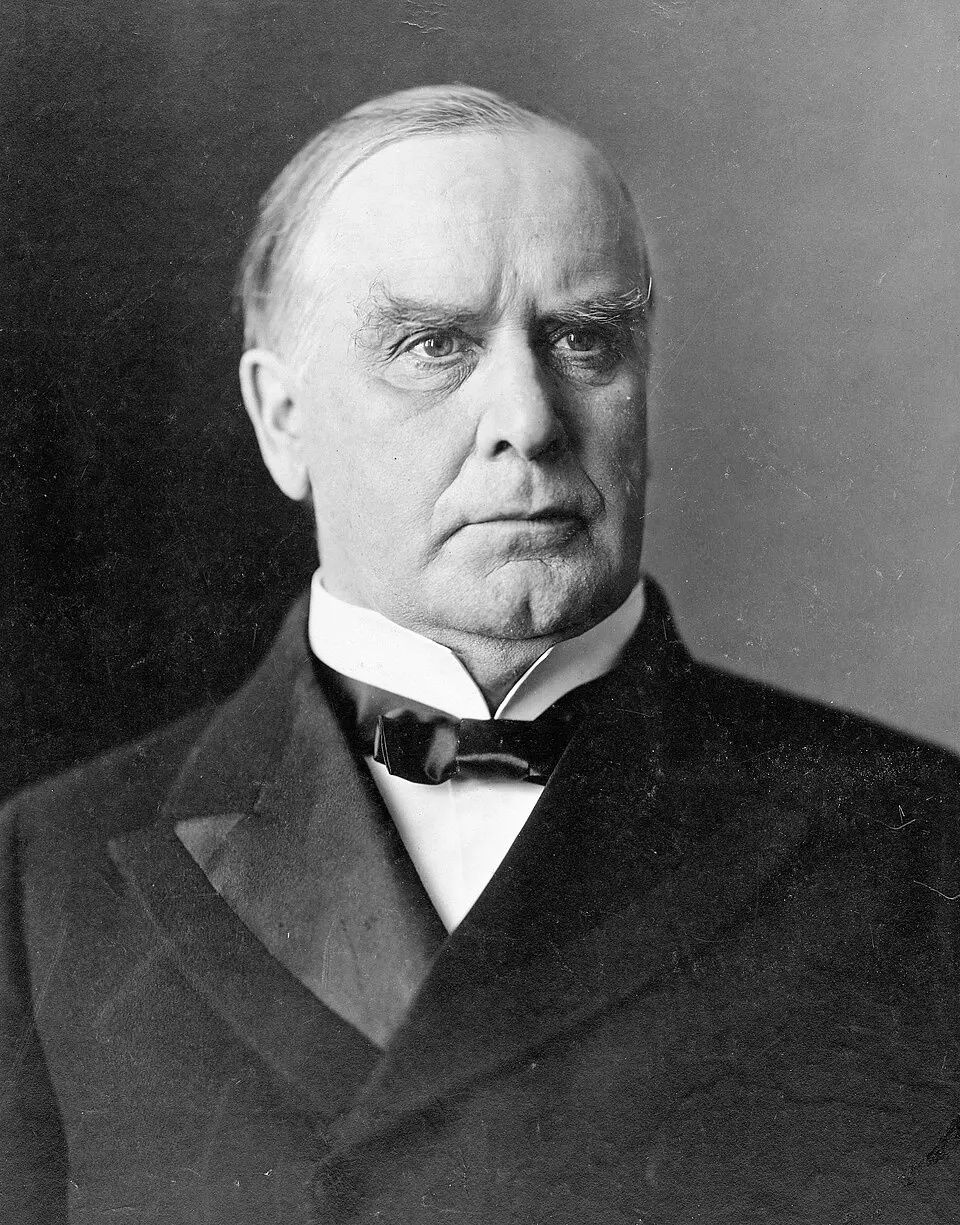
Was overseas expansion in 1898 a duty or a departure from American principles?
The acquisition of the Philippines divided the country. The Senate approved the Treaty of Paris by just one vote more than the required two-thirds.
Expansionists
McKinley, Theodore Roosevelt and Senator Henry Cabot Lodge argued that the islands could not be returned to Spain or left to rival powers, that the United States had obligations to their inhabitants, and that naval bases and Asian markets were vital national interests.
Anti-imperialists
Anti-imperialists — among them Mark Twain, Andrew Carnegie, Massachusetts Senator George F. Hoar and, in the 1900 campaign, William Jennings Bryan — argued that governing people without their consent contradicted the Declaration of Independence, and they condemned the harsh conduct of the war against Filipino independence forces.
Sources
- William McKinley: Foreign Affairs · Miller Center, University of Virginia