20th President · 1881

James A. Garfield

A self-made scholar and Civil War general whose presidency of barely six and a half months ended with an assassin’s bullet that spurred civil service reform.

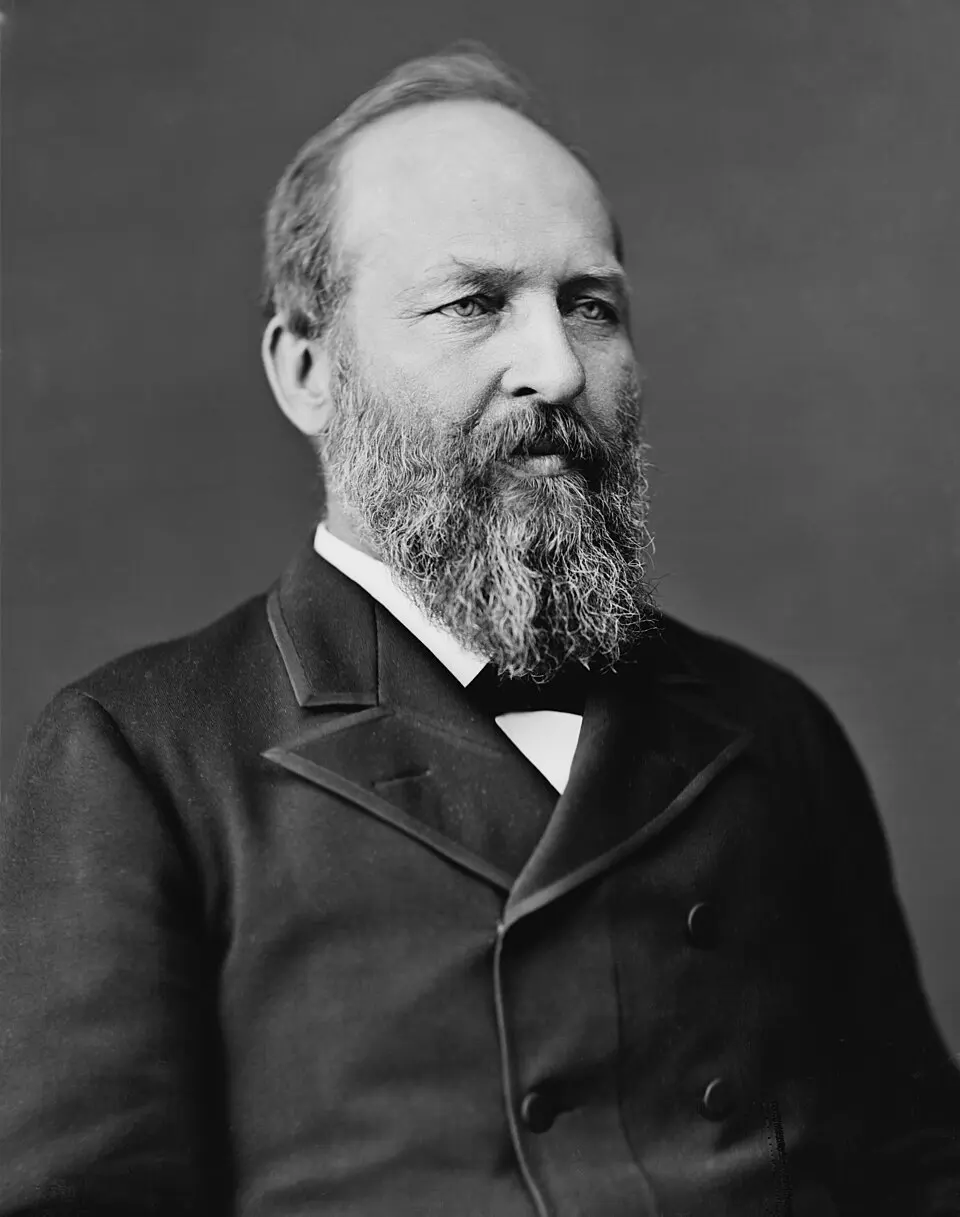
Portrait of James A. Garfield
James A. Garfield, 1881Photo: Brady-Handy Collection, Library of CongressPublic domainSource of this photograph (opens in a new tab)
Born
November 19, 1831Orange Township, Cuyahoga County, Ohio
Died
September 19, 1881
Home state
Ohio
Vice president
Chester A. Arthur

Life & Offices

Garfield was born in a log cabin in northeastern Ohio and raised by his widowed mother. After a stint driving canal boats, he paid his way through school partly by working as a janitor, graduated from Williams College, and became principal of the Western Reserve Eclectic Institute (now Hiram College). An antislavery Republican, he rose to major general in the Union Army and then spent seventeen years in the House, where he became one of the party’s leading voices on finance.

At the deadlocked 1880 Republican convention Garfield, who had come to nominate Treasury Secretary John Sherman, was chosen on the thirty-sixth ballot as a compromise between the Stalwart supporters of Ulysses S. Grant and the followers of James G. Blaine. He defeated Democrat Winfield Scott Hancock by one of the narrowest popular-vote margins in American history.

In office Garfield defied New York Senator Roscoe Conkling over control of patronage at the New York Custom House and prevailed when Conkling resigned from the Senate in protest. On July 2, 1881, Charles Guiteau, a disappointed office seeker, shot him at a Washington railroad station. Garfield lingered for eleven weeks while physicians repeatedly probed for the bullet, and died on September 19. Public revulsion at the spoils system helped produce the Pendleton Civil Service Reform Act of 1883.

Offices before the presidency

  • Ohio Senate (elected 1859)
  • Union Army officer; major general of volunteers (1861–1863)
  • U.S. House of Representatives, Ohio (1863–1880)

Era: III. Industrial America

The Record

  • 1881

    Inaugural Address on citizenship and education

    Garfield called the elevation of freedpeople “to the full rights of citizenship” the most important political change since the adoption of the Constitution, warned that violating the freedom of the ballot threatened the government itself, and urged universal education as the safeguard of suffrage.

    Primary Source
  • 1881

    Contest with Senator Conkling over the New York Custom House

    Garfield nominated William H. Robertson, a Conkling rival, as collector of the Port of New York. Conkling and fellow New York Senator Thomas Platt resigned in protest in May 1881, the Senate confirmed Robertson, and the episode strengthened the president’s hand over federal appointments.

    Historical Record
  • 1881

    Star Route investigation

    Garfield authorized an investigation of fraudulent Post Office contracts for rural “star route” mail delivery, even though prominent Republicans were implicated. Prosecutions continued under Arthur but ended without convictions of the principal defendants.

    Historical Record
  • 1881

    Appointment of Frederick Douglass

    Garfield appointed Frederick Douglass recorder of deeds for the District of Columbia, a post Douglass held until 1886.

    Historical Record
  • 1881–1883

    Assassination and civil service reform

    Garfield’s murder by a disappointed office seeker made the spoils system a national scandal. In January 1883 Congress passed, and President Arthur signed, the Pendleton Act creating a merit-based federal civil service.

    Historical Record

Criticism & Debate

Opposing View / Debate

Was Garfield’s fight with Conkling principled reform or factional politics?

Garfield’s months in office were consumed by a struggle between Republican factions over who would control federal patronage in New York.

Admirers

Admirers see a president asserting the independence of the executive against a senator who claimed the right to control federal appointments in his state, a stand that helped prepare the way for civil service reform.

Skeptics

Skeptics note that Garfield was himself a partisan who rewarded the Blaine wing of the party, and that civil service reform came only after his death, under the pressure of public outrage.

Opposing View / Debate

Did the Crédit Mobilier affair compromise Garfield?

In 1872–1873 a congressional investigation found that insiders of the Union Pacific Railroad had distributed shares of Crédit Mobilier, the railroad’s construction company, to members of Congress. Garfield was among those named, and the issue followed him into the 1880 campaign.

Critics

Democrats in 1880 accused Garfield of accepting stock and dividends and then misrepresenting it; the number “329,” said to be the dollars he received, was chalked on walls as a campaign taunt.

Defenders

Garfield insisted that he had declined the stock and that the only money he received was a loan he repaid, and Ohio voters continued to return him to Congress.

Sources

  1. James A. Garfield: Campaigns and Elections · Miller Center, University of Virginia

Documents

Sources

  1. James A. Garfield · Miller Center, University of Virginia
  2. James A. Garfield · White House Historical Association
  3. James A. Garfield: Presidential Documents · The American Presidency Project, UC Santa Barbara
  4. GARFIELD, James Abram · U.S. House of Representatives: History, Art & Archives
  5. James A. Garfield National Historic Site · National Park Service